South Wales Ceiling Installation: Quality You Can Rely On
Ceiling Installation Experts for Your South Wales Property: Professional Suspended Ceiling Solutions
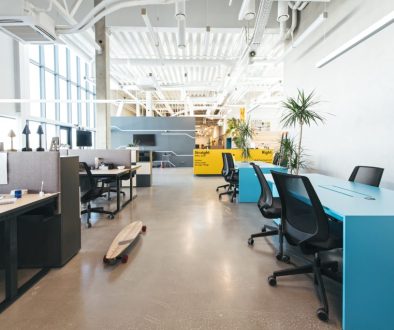
Suspended ceilings are modular interior systems that create a secondary ceiling beneath the structural slab, improving acoustics, concealment of services and thermal performance in commercial buildings across South Wales. This article explains the technical basics of suspended ceiling systems, compares the main ceiling types used in offices, retail and industrial settings, and outlines expected cost drivers plus measurable long-term returns. Many commercial property managers face noisy open-plan layouts, outdated finishes and complex service routes; well-specified ceiling systems provide practical solutions that improve occupant comfort, regulatory compliance and maintainability. After a brief company introduction you will find detailed sections on components, types, installation workflow, cost vs ROI modelling and maintenance guidance tailored to South Wales conditions. The guide integrates acoustic, fire-safety and energy-performance considerations and offers practical checklists to support procurement and specification decisions. Read on to understand what components matter, which ceiling types suit different commercial uses, how installation is staged to reduce disruption, and when to contact a specialist for a site survey and quotation.
Interior Systems Wales Ltd provides suspended ceiling installation and commercial fit-out services across South Wales, specialising in partitions, suspended ceilings and general refurbishments for clients in Cardiff, Swansea, Newport and Bridgend. This factual introduction links the regional need for professional ceiling systems to a local provider before we explore the technical and commercial guidance below.
What Are Suspended Ceilings and Why Are They Essential for South Wales Properties?
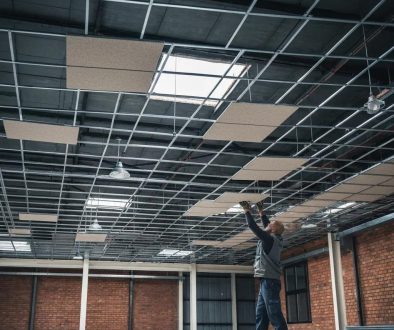
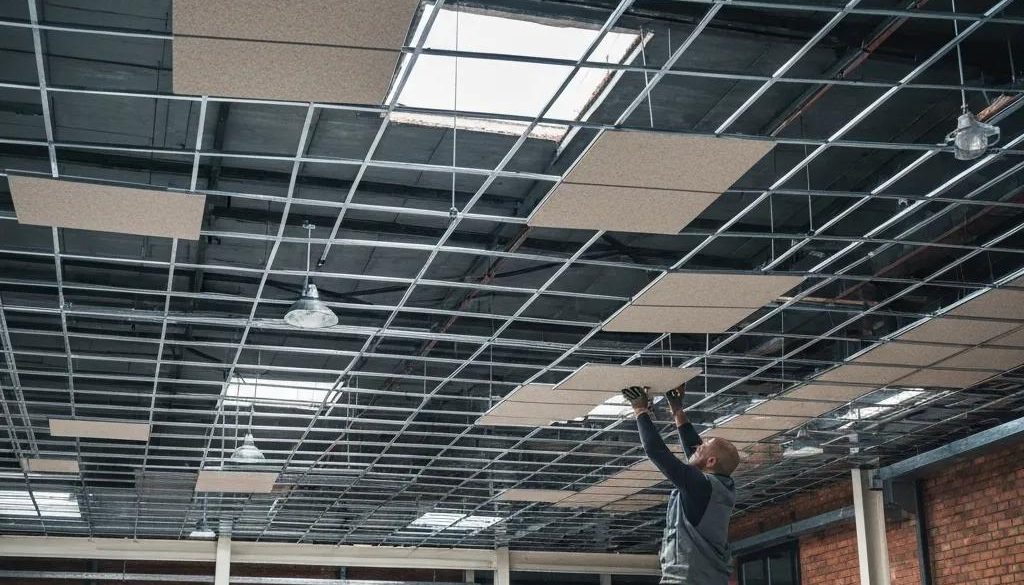
Suspended ceilings are secondary, hung ceilings made from a metal grid supporting tiles or plasterboard panels, designed to improve acoustics, thermal performance and concealment of building services in commercial spaces. They work by creating an accessible plenum that houses lighting, HVAC ducting and electrical runs while providing a performance layer—acoustic attenuation, fire resistance or insulation—depending on the specification chosen. For South Wales properties, suspended ceilings are essential because they allow retrofit upgrades (acoustic or fire-rated) without major structural work and provide efficient, maintainable routes for modern services. The following subsection breaks down the system components in practical terms for procurement and maintenance planning.
What Components Make Up a Suspended Ceiling System?
A suspended ceiling system comprises a metal grid, ceiling tiles or boards, hanger wires, perimeter trims and optional insulation or services within the plenum; each component performs a clear functional role. The grid creates the structural frame that supports tiles, hanger wires transfer load to the structural soffit, and perimeter trims provide a clean interface with walls; tiles or boards deliver acoustic, fire or aesthetic performance depending on material. Typical materials include mineral fibre tiles for acoustic absorption, metal tiles for durability and abrasion resistance, and plasterboard MF (metal-framed) for seamless finishes and bespoke detailing. Understanding these components helps when specifying maintenance routines and future alterations, which we cover in the maintenance section below.
Different suspended ceiling parts perform defined tasks that affect specification and long-term performance.
This component breakdown clarifies why material selection and installation quality directly influence acoustic and fire performance, which leads into how suspended ceilings improve commercial building functionality.
How Do Suspended Ceilings Improve Commercial Property Functionality?
Suspended ceilings improve functionality through four primary mechanisms: acoustic control, thermal separation, concealment & access to services, and fire compartmentation—each producing measurable operational benefits. Acoustic suspended ceilings increase sound absorption and reduce reverberation, which improves speech intelligibility and occupant concentration in offices and schools. Thermal and insulation layers reduce heating load by improving the effective U-value of upper floors and by enabling the insertion of insulation between slab and ceiling, contributing to reduced energy consumption. Concealment creates an accessible plenum for maintenance and future service changes, lowering retrofit costs, while fire-rated tiles and grids contribute to compartmentation strategies required by Approved Document B guidance. These functional improvements translate into improved staff productivity, lower running costs and simplified long-term maintenance schedules, which are explored further in the types and ROI sections that follow.
Which Types of Ceiling Installations Do South Wales Commercial Properties Need?
Choosing the right ceiling type depends on acoustic targets, fire requirements, durability and the built environment; commercial properties in South Wales commonly specify acoustic suspended ceilings, fire-rated ceilings, metal ceilings and plasterboard MF ceilings. Each type targets distinct performance attributes: acoustic tiles focus on NRC (noise reduction coefficient), fire-rated systems prioritise minutes of integrity/insulation, metal systems emphasise durability and hygiene, and plasterboard MF systems deliver seamless finishes and integration with lighting and services for retail fit-outs. Below we summarise the technical attributes and best-use cases for each main category to guide selection during tendering or specification.
What Are the Benefits of Acoustic Suspended Ceilings for Offices?
Acoustic suspended ceilings maximise sound absorption and reduce reverberation, improving speech privacy in open-plan offices and meeting rooms while decreasing ambient noise in hospitality and education spaces. Typical materials include mineral fibre tiles with mid-to-high NRC ratings, which absorb mid-to-high frequency energy associated with human speech; this reduces distraction and increases perceived comfort for occupants. When paired with appropriate background HVAC noise control, acoustic ceilings contribute to improved productivity and lower stress-related absenteeism in staff. Specifiers should target products with tested NRC ratings and choose tiles that balance acoustic performance with maintenance and aesthetic requirements.
Acoustic performance choices must be weighed against maintenance regimes and aesthetic goals to ensure long-term occupant satisfaction; the next subsection compares fire-rated systems that address a different regulatory priority.
How Do Fire-Rated Ceilings Ensure Safety and Compliance in Commercial Buildings?
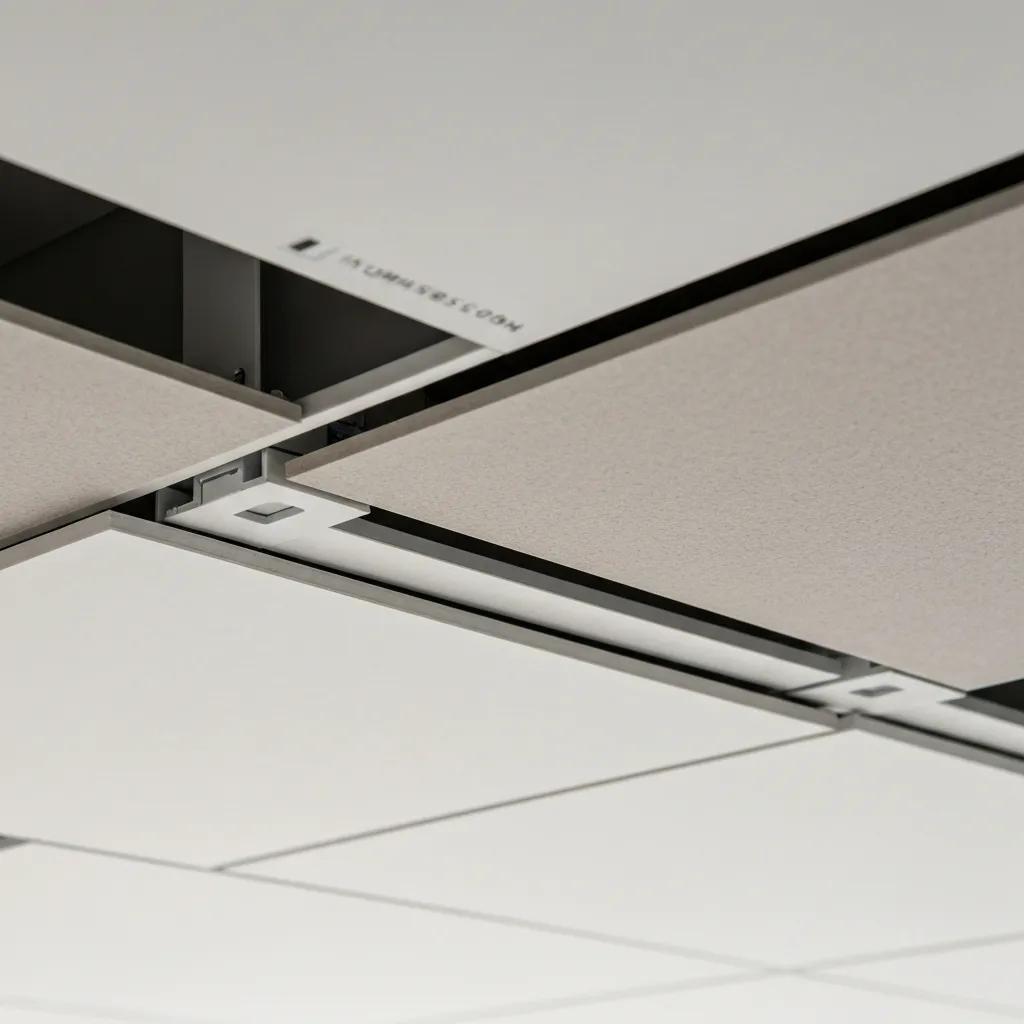
Fire-rated suspended ceilings are designed to provide defined periods of fire resistance—measured in minutes—which support compartmentation strategies and escape routes in commercial buildings, aligning with relevant UK regulatory expectations. These systems typically combine fire-rated tiles/boards with a compatible grid and may include intumescent seals at perimeter interfaces to maintain integrity under fire conditions. Specifiers reference Approved Document B and local building control guidance to match required fire resistance periods for specific building uses and floor separation scenarios. Careful coordination of fire-rated ceilings with other fire strategies—such as detection, suppression and compartmentation—ensures the ceiling contributes effectively to overall life-safety objectives and regulatory compliance.
Why Choose Metal Suspended Ceilings for Industrial and High-Traffic Areas?
Metal suspended ceilings offer superior durability, easy cleaning and long service life in industrial, healthcare or commercial kitchens where impact resistance and hygiene are priorities. Aluminium or steel tile systems resist damage, withstand frequent cleaning regimes and can integrate louvres or perforations for acoustic tuning while maintaining structural robustness. The lifecycle cost advantage emerges from reduced tile replacement rates and lower downtime for repairs compared with softer mineral fibre options. Choose metal systems where high durability, controlled hygiene and repeatable maintenance procedures drive total cost of ownership decisions.
What Are Plasterboard MF Ceilings and Their Advantages for Retail Spaces?
Plasterboard MF (metal-framed) ceilings provide a smooth, continuous finish ideal for retail fit-outs where seamless aesthetics and bespoke shapes are required to integrate tracked lighting, signage and services. These systems use a metal framework to support plasterboard panels that are tapered and jointed to create continuous planes, enabling feature details like curved coves and recessed lighting without visible grid lines. The result is a premium finish that supports brand-led retail environments and integrates concealed services for a clean customer experience. For projects requiring detailed decoration and integrated lighting, plasterboard MF ceilings offer the finish quality and flexibility that standard tile grids cannot match.
To help compare attributes and best-use cases quickly, the table below summarises the main types.
This comparison helps specifiers immediately prioritise ceiling type selection based on performance needs and building function, informing the installation process outlined in the next section.
How Does Interior Systems Wales Ltd Deliver Expert Ceiling Installation Services in South Wales?
Interior Systems Wales Ltd manages ceiling projects across South Wales using a structured process that emphasises tailored design, transparent pricing and flexible scheduling to minimise operational disruption. Their service model includes site surveys and specification advice, phased installation planning for occupied buildings, clear written quotations and post-installation handover documentation; scheduling options include weekend and out-of-hours works to keep businesses operational. The company positions these UVPs—tailored design, transparent pricing and responsive communication—as practical measures that reduce project risk and ensure predictable outcomes for commercial clients. Below we detail the step-by-step workflow clients can expect during a typical suspended ceiling project.
What Is the Step-by-Step Installation Process for Suspended Ceilings?
A typical installation follows a clear sequence: initial site survey and specification, design and materials selection, detailed quotation with scope and exclusions, phased installation and commissioning, then client handover and maintenance guidance. The site survey documents ceiling heights, existing services and access constraints and informs fire and acoustic specification choices; the design stage produces drawings and a bill of materials for approval. During installation contractors erect a temporary working zone, install hangers and grid, place tiles and integrate services before commissioning acoustic or fire-rated elements and providing snagging. Quality checks and a formal handover ensure the installed system meets specified acoustic, fire and aesthetic targets.
How Does Flexible Scheduling Minimise Disruption to Your Business Operations?
Flexible scheduling mitigates operational impact by using out-of-hours work, weekend shifts and phased installation zones so occupied areas remain functional while works progress in adjacent sections. Practical strategies include cordoning off single floors, performing noisy tasks after hours and sequencing work to preserve critical operational routes; planned phasing also allows progressive handover of each area. These approaches reduce downtime and support continuous operations for retail outlets, offices or healthcare facilities during fit-outs. Interior Systems Wales Ltd offers weekend and out-of-hours scheduling as a factual service feature to accommodate business continuity needs, enabling clients to maintain service while upgrades proceed.
Flexible schedules and phased works reduce visible disruption and shorten perceived project impacts, guiding realistic cost expectations covered in the next section.
What Are the Key Benefits of Choosing Professional Ceiling Contractors in South Wales?
Choosing established professional ceiling contractors delivers benefits in compliance, quality of finish, predictable budgeting and tailored technical solutions that non-specialist providers often miss. Professionals ensure systems are specified to achieve acoustic and fire performance targets, coordinate with other trades to avoid service clashes, and deliver clear documentation for future maintenance. Transparent pricing and scope clarity reduce procurement risk, while tailored design adapts standard systems to unique building constraints such as listed features or unusual service routes. The following list highlights core advantages to commercial clients considering a ceiling contractor.
- Regulatory Compliance: Contractors specify systems that support fire and building regulation requirements.
- Quality Assurance: Trained installers and commissioning reduce rework and defects.
- Predictable Costs: Clear quotes with scope and exclusions limit financial surprises.
These benefits form the basis for confident procurement decisions and lead into how transparent pricing supports trust during commercial projects.
How Does Transparent Pricing Build Trust with Commercial Clients?
Transparent pricing builds trust by clearly separating scope, material costs, labour rates and known exclusions, which enables clients to compare proposals and control budgets during procurement. A complete quote typically includes a design allowance, materials schedule, labour phasing, provisional sums for unknowns and a maintenance handover allowance; presenting these items reduces ambiguity and facilitates contract management. When contractors explain pricing drivers—access, fire-rating, acoustic specification and phasing—clients better understand trade-offs and can prioritise features. Clear pricing reduces disputes during delivery and supports better long-term relationships between clients and contractors.
Clear quotes allow clients to make informed trade-offs, which is critical when bespoke design is required for unique properties as described next.
Why Is Tailored Ceiling Design Important for Unique Property Needs?
Tailored ceiling design addresses irregular ceilings, heritage constraints or bespoke branding requirements that off-the-shelf solutions cannot meet, providing both functional performance and the desired aesthetic finish. Custom solutions might include non-standard grid layouts, curved plasterboard MF features, or mixed material schemes combining acoustic tiles and metal panels for zoned performance. Tailored design protects heritage fabric, integrates services invisibly, and ensures acoustic zoning matches occupancy patterns. Professional design reduces retrofit risk and ensures the finished ceiling supports both operational needs and the client’s visual brief.
Tailored specifications inform accurate costing and ROI calculations, which we examine in the next section to help quantify benefits over time.
How Much Does Commercial Ceiling Installation Cost in South Wales and What Is the ROI?
Commercial ceiling costs vary with material, fire or acoustic specification, site access and phasing; typical budget drivers include tile type, grid complexity, hanger distances and the need for fire-rated interfaces. While exact prices depend on site-specific surveys, important cost categories are material specification, labour and access preparation, phasing and testing/commissioning for acoustic or fire-rated systems. Long-term ROI arises from energy savings via improved thermal performance, reduced maintenance and replacement costs, and productivity gains from better acoustics. The table below compares ceiling types by primary cost drivers and ROI notes to aid early budgeting and payback thinking.
This table shows how specification choices affect both upfront budgets and ongoing value; the next subsection breaks down specific factors that influence cost.
What Factors Influence the Cost of Suspended Ceiling Installation?
Several site-specific variables influence cost: material choice (mineral fibre vs metal vs gypsum), required fire/acoustic ratings, site access and scaffold needs, complexity of existing services, and the degree of phasing required to keep operations live. Labour intensity rises where bespoke plasterboard MF finishes are required or where ceilings must integrate numerous services and lighting. Access challenges—high soffits, restricted lifts or occupied floors—raise logistic costs and may necessitate weekend or out-of-hours work to maintain operations. Understanding these drivers allows owners to prioritise spec options that balance capital expenditure and long-term operational benefits.
Identifying cost drivers supports ROI calculations, which we discuss next to explain how modern systems save energy and improve acoustics over time.
How Do Modern Ceiling Systems Deliver Long-Term Energy and Acoustic Savings?
Modern suspended ceiling systems deliver energy savings by enabling additional insulation in the plenum and improving the apparent thermal separation between occupied spaces and unheated voids, which reduces heating and cooling loads. Acoustic savings manifest as improved occupant concentration and fewer interruptions, which indirectly boosts productivity and reduces absenteeism; manufacturers and practitioners often model payback periods by estimating productivity gains against installation cost. Additionally, durable materials such as metal tiles reduce replacement rates and waste, lowering lifecycle maintenance costs. Combining thermal and acoustic improvements can produce measurable payback periods where energy savings and performance gains offset initial investment over typical commercial asset horizons.
These ROI mechanisms help prioritise specifications during procurement and feed into maintenance planning, which we cover in the final section.
What Are the Most Common Questions About Ceiling Installation in South Wales?
Facility managers frequently ask about materials, mechanics, maintenance frequency and when to call specialists; concise answers reduce procurement friction and prepare decision-makers for surveys and quotes. This section answers common PAA-style questions about composition and upkeep, providing short, actionable guidance for site teams and procurement leads. For complex or site-specific queries, a specialist site survey is recommended to produce accurate costing and specification.
What Are Suspended Ceilings Made Of and How Do They Work?
Suspended ceilings are generally made from a metal grid supporting tiles or boards of mineral fibre, metal or plasterboard, with hanger wires transferring loads to the structural soffit and trims finishing edges for a neat reveal. Mineral fibre tiles offer acoustic absorption; metal tiles provide durability and washable surfaces; plasterboard delivers seamless finishes for premium fit-outs. The system works by creating an accessible plenum above the tiles for services, allowing maintenance without altering the visible ceiling and enabling specification upgrades such as additional insulation or fire-rated tiles. Understanding material trade-offs helps owners match specification to use-case and maintenance capacity.
How Can You Maintain and Repair Suspended Ceilings Effectively?
Routine maintenance includes periodic inspection of tiles for staining or damage, cleaning or replacing soiled tiles, checking hanger wire tension and ensuring perimeter seals remain intact; frequency typically aligns with tenancy turnovers or annual audits. Quick repairs often involve replacing individual tiles, tightening hangers or re-sealing perimeters; more complex issues—sustained water staining, structural movement or compromised fire-rated elements—require a professional assessment. A simple maintenance checklist can reduce lifecycle costs: inspect annually, replace damaged tiles promptly, keep a small stock of matching tiles and document any service penetrations in the plenum. When repairs exceed simple tile replacement, engage a specialist to maintain acoustic and fire performance.
For project enquiries, site surveys or quotations, contact the local specialist below to arrange an assessment and formal proposal.
If you would like a professional site survey, quotation or further specification advice, contact Interior Systems Wales Ltd by phone at 01446 750994 or by email at info@interiorsystemswales.co.uk. A short project enquiry enables a tailored proposal that includes scheduling options (including weekend and out-of-hours work), transparent pricing and a phased installation plan to minimise disruption. Their regional coverage includes Cardiff, Swansea, Newport and Bridgend, and a formal site visit will produce a specification, cost estimate and recommended phasing to suit operational requirements. Use the contact details above to request a site visit or discuss project scope with a member of the delivery team.
- To arrange a survey: Provide property location, approximate area and primary objectives (acoustic, fire, aesthetic).
- To request a quote: Ask for a written scope, materials schedule and phased programme with exclusions.
- For urgent repairs: Describe the defect and preferred access windows to help triage response.
These steps help streamline the procurement process and ensure you receive comparable proposals with clear scopes and predictable outcomes.