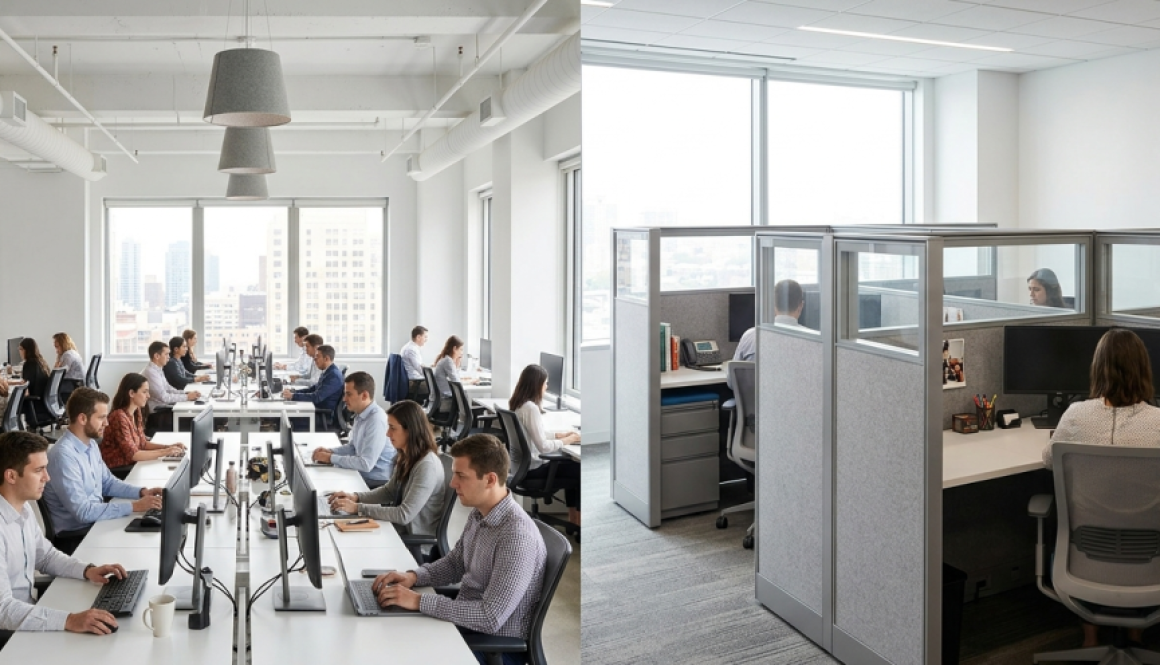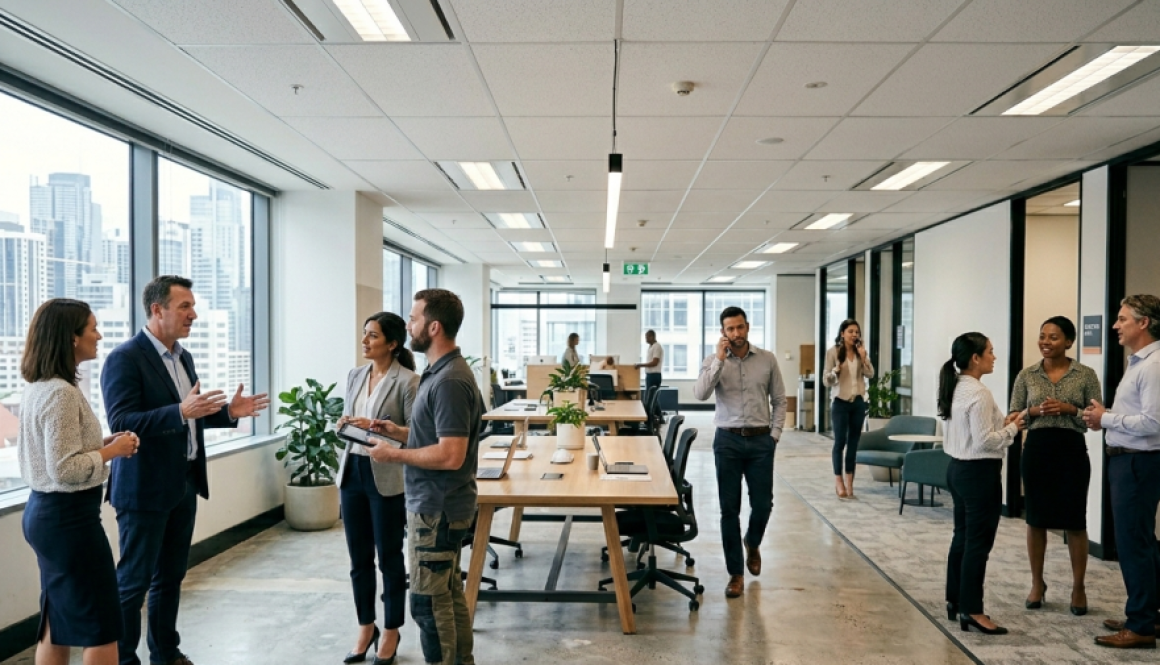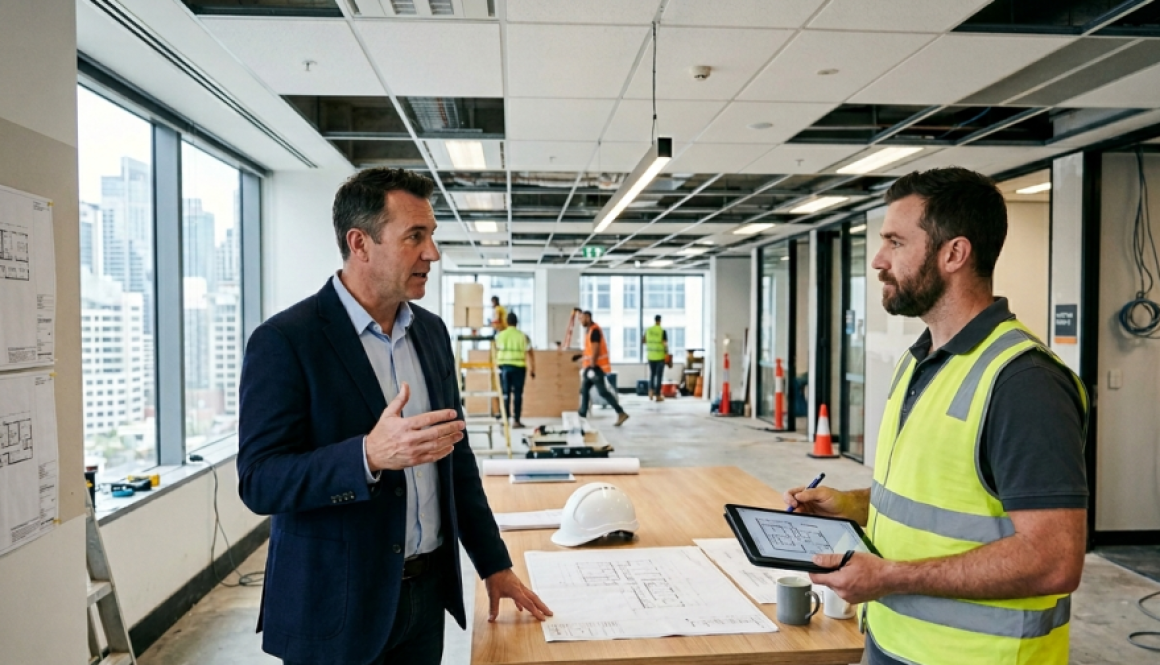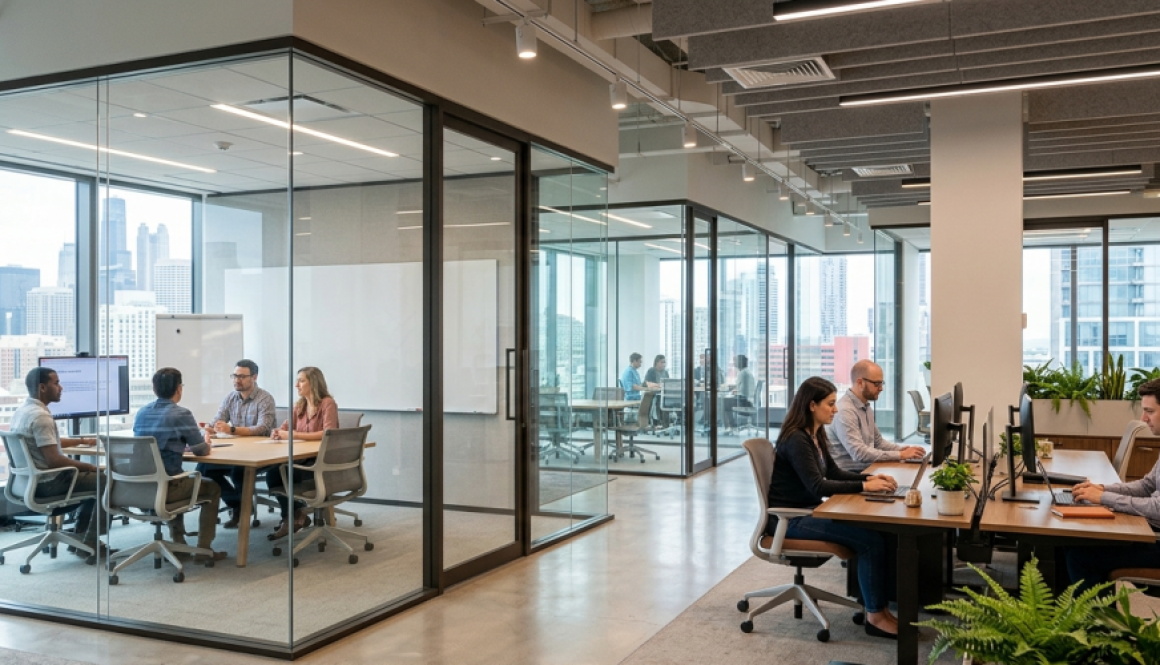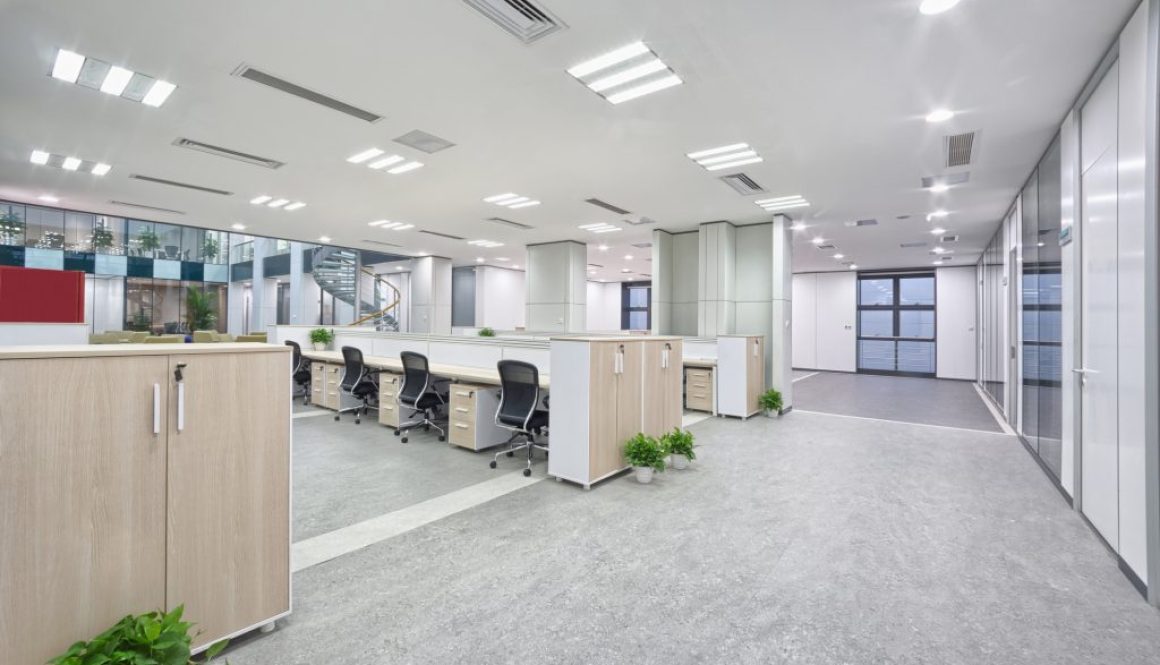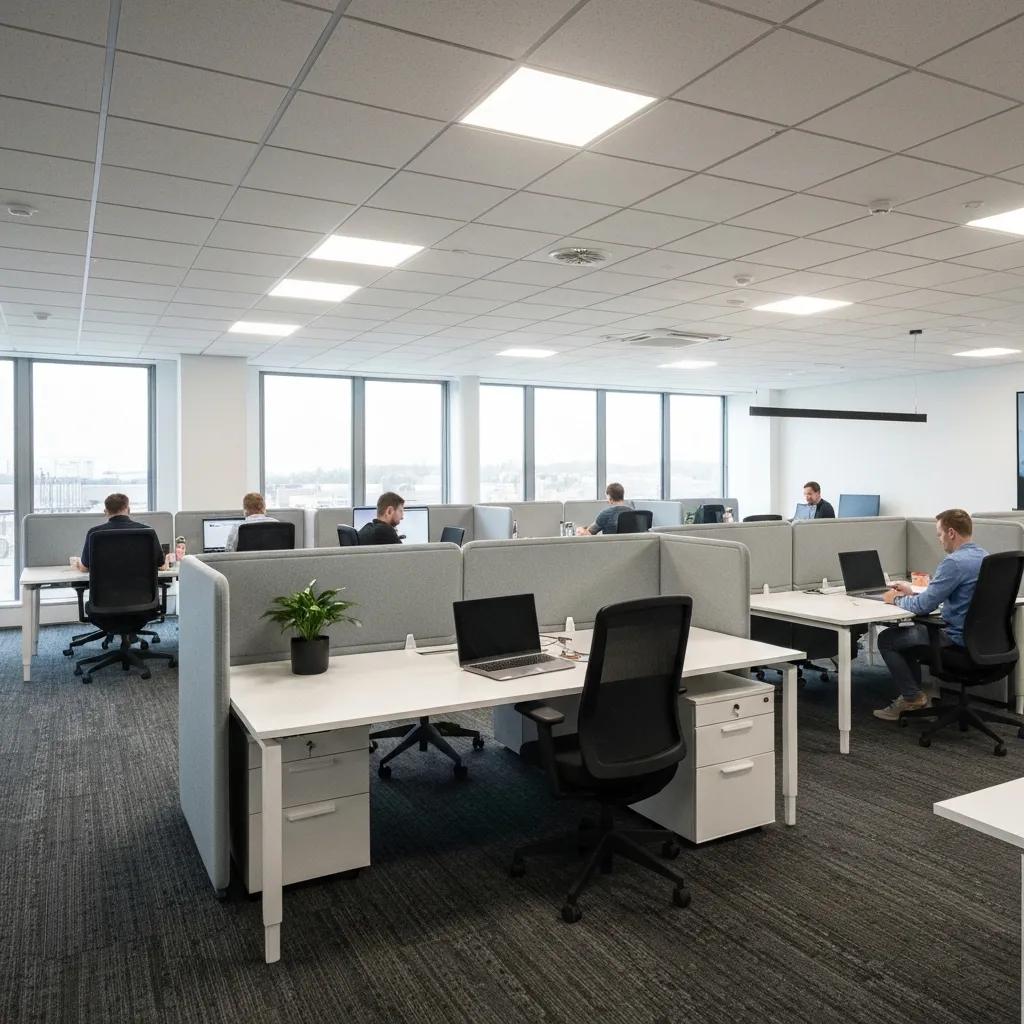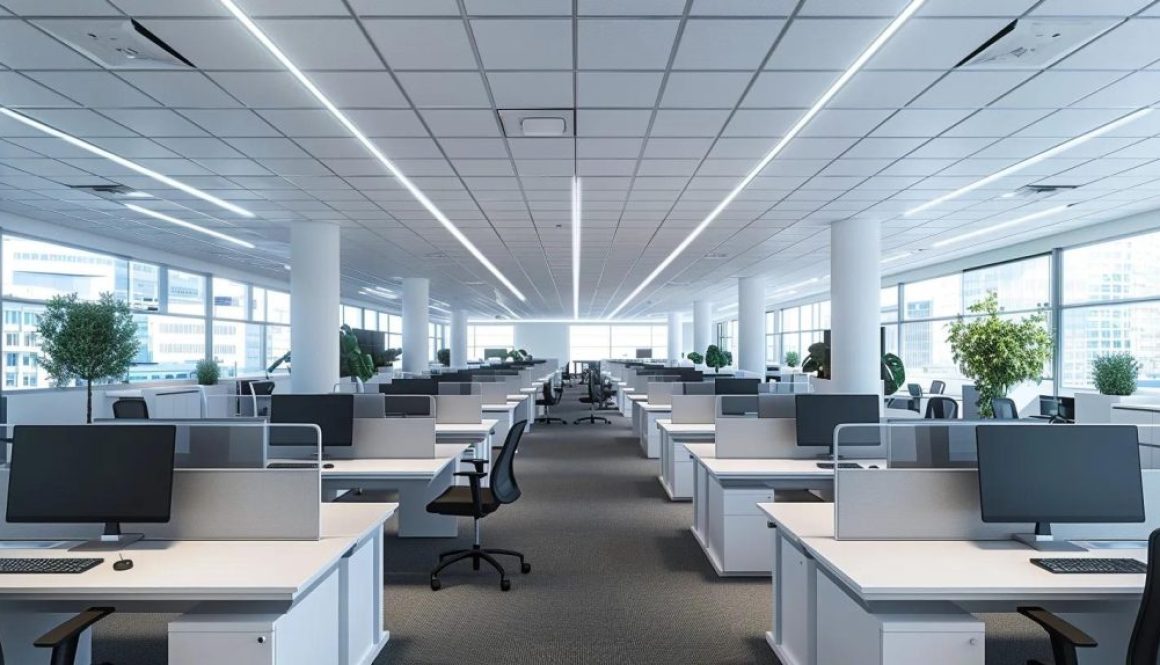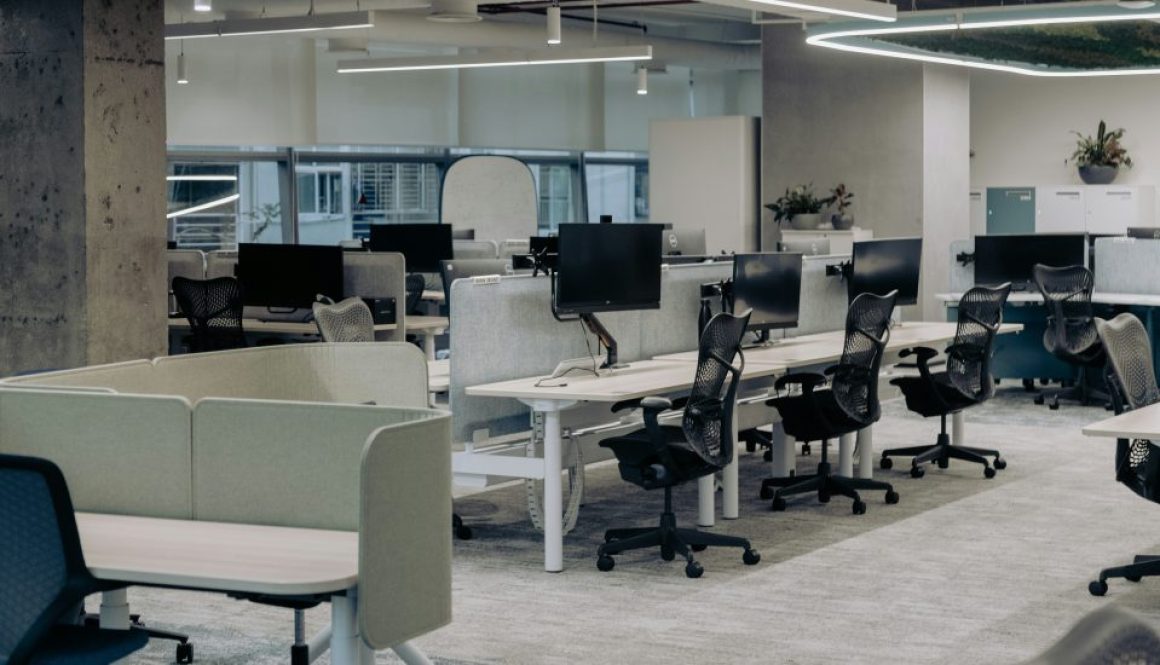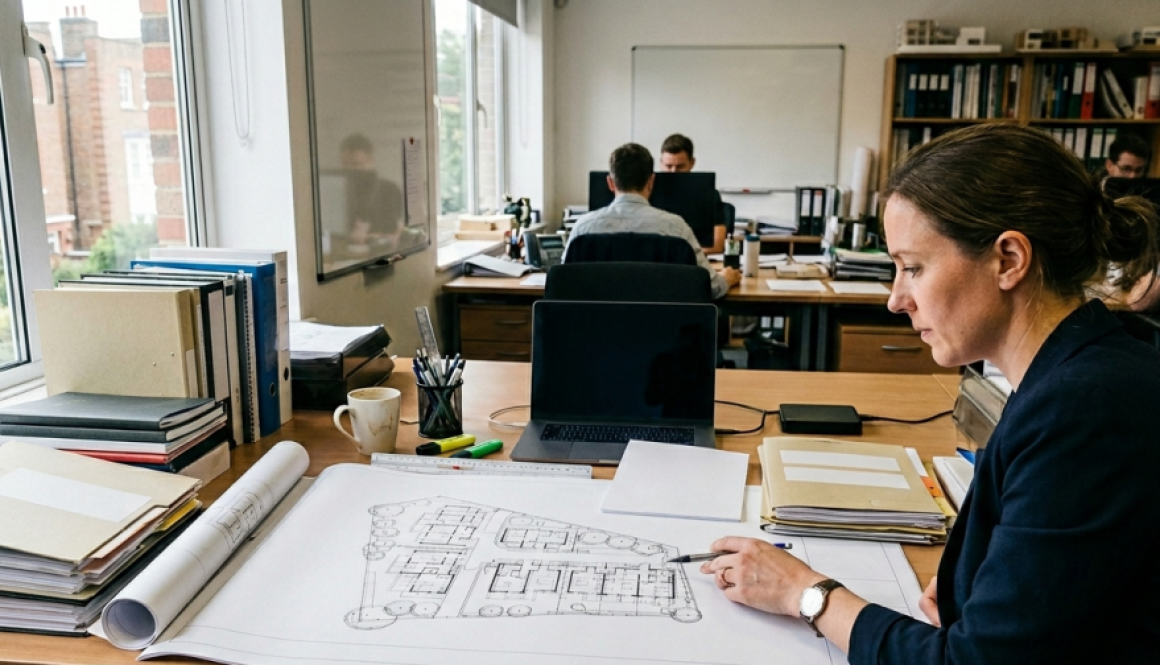
Your team is trying to focus. But somewhere across the office, a phone call is echoing off the walls, two colleagues are having a lively catch-up, and the hum of the open plan is making deep work feel almost impossible.
If this sounds familiar, you’re not alone. Noise is one of the most common complaints in modern commercial workspaces and one of the most underestimated threats to productivity, wellbeing, and staff retention.
The good news is that it’s a problem with a practical, proven solution: acoustic partitions.
Why Office Noise Is More Costly Than You Think
It’s easy to dismiss office noise as an inconvenience rather than a business issue. But the evidence tells a different story.
Persistent background noise reduces concentration, increases errors, and raises stress levels. For teams that spend their days on the phone, in detailed work, or managing sensitive conversations, the impact on performance and ultimately on your bottom line can be significant.
Beyond productivity, noise affects how your space feels to clients who visit, candidates you’re interviewing, and the people who work there every day. A noisy office is rarely a confident one.
What Are Acoustic Partitions?
Acoustic partitions are internal wall systems specifically engineered to reduce sound transmission between spaces. Unlike standard stud partitions or frameless glass screens, they incorporate sound-absorbing and sound-blocking materials within their construction delivering a measurable reduction in the noise that travels from one area to another.
They can be used to divide open-plan floors, create private meeting rooms, separate call-heavy teams from quieter workspaces, or enclose areas where confidentiality matters.
In short: they do everything a standard partition does, but with the added benefit of meaningful noise control.
The Main Types of Acoustic Partitions
Not all acoustic partitions are the same. The right solution for your space will depend on your layout, your budget, and the level of sound reduction you need.
Acoustic stud partitions are full-height, solid wall systems built using high-density materials and specialist acoustic insulation. They offer the highest level of sound reduction and are ideal for permanent meeting rooms, private offices, or areas where confidentiality is essential.
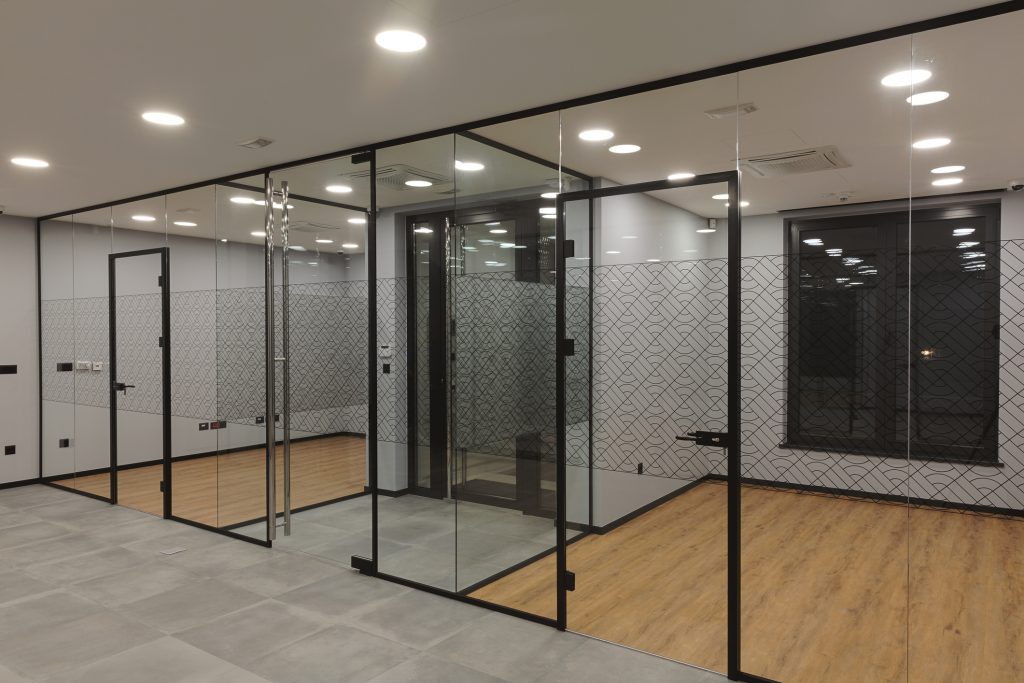
Glazed acoustic panels combine sound performance with transparency, allowing natural light to pass through while still reducing noise. These work particularly well in client-facing environments where you want an open, professional feel without sacrificing privacy.
Demountable acoustic systems offer flexibility alongside performance. These modular partition systems can be reconfigured as your business changes, and are useful for growing businesses that aren’t sure exactly what their space will need in two or three years’ time.
Where Acoustic Partitions Work Best
Acoustic partitions deliver the most value in spaces where noise is actively interfering with how people work. In our experience across commercial projects in South Wales, the most common applications include:
Meeting rooms and boardrooms, where confidential conversations shouldn’t be audible to the wider office. Call centre floors and sales teams, where high volumes of simultaneous calls create a wall of sound that makes concentration difficult for everyone nearby. Open-plan offices adjacent to private workspaces, where the contrast between the two environments creates friction. And reception and client-facing areas, where background noise can undermine the professional impression you’re trying to create.
What Level of Sound Reduction Can You Expect?
Acoustic performance is measured using a rating called Rw: the weighted sound reduction index. The higher the Rw rating, the more sound a partition blocks.
A basic stud partition might achieve an Rw of around 35–40 dB. A well-specified acoustic partition system can reach 50 dB or above; a difference that is immediately and clearly noticeable to the people on either side of the wall.
In practical terms, this is the difference between being able to hear a conversation clearly through a wall and barely being able to tell there’s one happening at all.
The right specification will depend on your specific situation: the size of the space, the type of noise you’re dealing with, and the layout of your building. A good contractor will assess all of this before making a recommendation, rather than suggesting a one-size-fits-all solution.
Do Acoustic Partitions Have to Look Industrial?
This is one of the most common concerns we hear and it’s completely understandable. Nobody wants to solve a noise problem by making their office feel like a recording studio.
The reality is that modern acoustic partitions are available in a wide range of finishes and styles. Fabric-wrapped panels can be specified in colours and textures that complement your existing interior. Glazed acoustic systems bring elegance and light. Full-height systems can be finished in plasterboard and decorated exactly like a standard wall.
Done well, acoustic partitions are simply part of a well-designed office, not an afterthought bolted on to manage a problem.
The Right Solution for Your Workspace
If noise is affecting how your team works, acoustic partitions are one of the most effective and long-lasting improvements you can make to your commercial space. They’re not a compromise, they’re an investment in a workspace that genuinely supports the people inside it.
At Interior Systems Wales, we design and install acoustic partition systems across South Wales, tailoring every solution to the specific needs of the space and the business.
If you’d like to discuss your project, we’d be happy to talk it through with no obligation.
Your commercial space needs to work as hard as your team does. Whether you’re expanding into a new unit, modernising a tired office, or transforming an industrial space into something that genuinely reflects your business, a fit-out project is one of the most significant investments you’ll make in time, in money, and in the future of your operation.
The problem is, not every contractor is right for every project. And when things go wrong such as unexpected costs, missed deadlines, poor workmanship, or a complete breakdown in communication, the consequences don’t just affect the building work. They ripple through your entire business.
So how do you avoid that? You ask the right questions before you commit. Here are five that every business owner in South Wales should be putting to any contractor they’re considering.
1. Do You Have Experience With Projects Like Mine?
This sounds straightforward, but it’s more important than it might first appear. Fit-out is a broad discipline, and experience in one area doesn’t automatically translate to another. A contractor who has spent years refitting retail units will have a very different skill set and a very different approach to one who works primarily on commercial offices, industrial buildings, or multi-trade projects.
Before you go any further, ask to see examples of similar projects. How many have they completed in the past two years? What was the scope? Were there any challenges, and how were they managed?
If possible, ask whether you can speak to a previous client directly. A reputable contractor won’t hesitate. They’ll have case studies, photographs, and references ready because they’re proud of what they’ve delivered. If a contractor is vague about their previous work or reluctant to share evidence of it, that tells you something important before the project has even begun.
2. Can You Provide a Fully Itemised Quote?
Vague quotes are where fit-out projects start to unravel.
A one-page summary with a single total figure at the bottom tells you very little. What it doesn’t tell you is how costs are split between materials and labour, what’s included in any contingency allowance, or what happens to the price if the specification changes mid-project. These are exactly the kinds of gaps that lead to disputes, delays, and bills that look nothing like what you originally agreed to.
A professional contractor will provide a detailed, transparent breakdown that you can actually read and understand without needing to ask follow-up questions at every line. This matters not just for budget management, but as an indicator of how the contractor operates. Meticulous quoting usually means meticulous project management.
At Interior Systems Wales, we provide clear, fully itemised quotes from the outset. No hidden costs. No vague allowances. No surprises when the invoice arrives.
3. How Will You Manage Disruption to My Business?
For many businesses, the idea of a fit-out is exciting right up until the moment you realise the work has to happen while you’re still open. Downtime costs money, and disruption to staff, clients, and daily operations can quickly turn a positive project into a stressful one.
Ask any contractor you’re considering how they plan to manage this. Are they willing to work outside of normal business hours such as evenings, weekends, or phased handovers to minimise the impact on your team? How will they communicate progress throughout the project? What’s their contingency plan if something unexpected comes up on site?
A contractor who has genuinely thought about this will have clear, considered answers. One who hasn’t is likely to treat disruption as your problem rather than theirs.
We schedule work around our clients’ operations as standard, including out-of-hours working where needed, because we understand that most businesses can’t simply press pause while building work is underway.
4. Are You Fully Compliant With UK Building Regulations?
Commercial fit-outs are subject to a range of regulatory requirements and they’re not optional. Depending on the scope of your project, this can include fire safety compliance, acoustic performance standards, structural requirements, electrical certification, and accessibility obligations under the Equality Act.
A professional contractor will be able to demonstrate full compliance without you having to chase it. They’ll know which regulations apply to your specific project, hold the relevant accreditations, and be able to explain clearly and without waffle how their work meets those standards.
This isn’t just about ticking boxes. Non-compliant work can result in enforcement action, costly remediation, and in some cases, serious safety risks. If a contractor seems unclear on the regulations, or suggests that compliance is something to think about later, treat it as a serious warning sign.
5. Who Will Be My Point of Contact Throughout the Project?
Poor communication is one of the most consistent complaints about contractors across every sector. Projects that start well can deteriorate quickly when clients are left chasing updates, dealing with multiple different people, or finding out about problems after the fact rather than as they arise.
Before any work begins, establish exactly who is managing your project day-to-day. Will you have a single, named point of contact? How often will you receive updates, and in what format? If an urgent issue arises on site, who do you call and how quickly can you expect a response?
A contractor with strong project management will have clear answers to all of these questions. A well-run project requires clear lines of responsibility and that starts with knowing who is accountable from day one.
The Bottom Line: Choose a Contractor You Can Trust
A great fit-out contractor will welcome every one of these questions because they’ll have confident, well-evidenced answers to all of them. In fact, the way a contractor responds to your questions before the project starts is often the most reliable indicator of how they’ll perform once it’s underway.
At Interior Systems Wales, we’ve been delivering commercial fit-outs across South Wales for over a decade. We work transparently, communicate consistently, and take genuine pride in delivering projects that meet and exceed our clients’ expectations, on time and within budget. From partitions and suspended ceilings to full commercial fit-outs, we bring the experience, the expertise, and the reliability that your project deserves.
If you’re planning a commercial project and you’d like to work with a contractor you can genuinely rely on, we’d love to hear from you.
Your office should be working as hard as your team does. But if you’re honest about it, does it?
For a lot of businesses across South Wales, the answer is probably somewhere between “not quite” and “definitely not.” The layout feels like an afterthought. The open-plan floor that was meant to encourage collaboration has somehow become a source of distraction instead. Meeting rooms feel cut off from the rest of the team. Natural light struggles to reach the middle of the building. And the whole space just doesn’t reflect the professional, forward-thinking company you actually are.
It’s a frustrating position to be in, especially when you know the potential is there, right in front of you.
The Problem with Most Office Layouts
Here’s something worth sitting with: the design of your workspace directly shapes how your people work within it.
Traditional solid walls might feel like the obvious solution when you need to divide space. But they come with real trade-offs. They block natural light. They create closed, disconnected pockets that make a building feel smaller and more fragmented than it needs to be. They signal a way of working that most modern businesses have already moved beyond.
On the other end of the spectrum, a completely open-plan office has its own challenges. Without any structure or separation, noise bleeds everywhere. There’s nowhere to take a private call, run a focused meeting, or simply get your head down without interruption.
What most businesses actually need is something in between; A workspace that feels open and connected, but still gives people the separation they need to do their best work.
There’s a Better Way to Divide Your Space
Glass partitions solve this problem in a way that solid walls simply can’t.
They allow you to divide your office into clearly defined zones: meeting rooms, private offices, collaboration areas, quiet working spaces; Without breaking up the visual connection across the floor. Light still travels through. The team still feels part of the same environment. And the space retains that bright, open quality that makes modern offices feel genuinely good to work in.
It sounds simple, but the impact is significant.
When natural light can move freely throughout a building, the whole atmosphere changes. Spaces feel larger. The environment feels more welcoming for your team on a Monday morning, and for clients walking in for the first time. That first impression matters more than most people give it credit for.
What This Looks Like in Practice
At Interior Systems Wales, we’ve been installing partition systems for businesses across South Wales since 2009. We’ve worked with companies in a wide range of sectors, and we’ve seen the same transformation happen time and again.
A large open-plan office that felt chaotic becomes a properly structured workspace, with dedicated zones that serve different purposes. A tired, dated interior gets a clean, contemporary look that genuinely reflects the company behind it. A business that had outgrown its layout finds it can adapt and reorganise without the disruption and expense of a full structural renovation.
Glass partitions are rarely a standalone solution, and the best results come from thinking about them as part of a wider interior fit-out. Combined with suspended ceiling systems that improve acoustics and integrate lighting effectively, and finished with professional carpentry and decorating, the result is a workspace that’s not just visually transformed, it functions better too.
We also install complementary partition types where they’re needed. Soundproof partitions for spaces that require acoustic privacy. Fire-rated partitions that meet safety compliance requirements. Jumbo partitions for larger industrial or warehouse environments. Every project is different, and we design each solution around how your business actually operates.
You Shouldn’t Have to Compromise
One of the things we hear most often from businesses before a project is that they feel like they have to choose between openness and practicality. Between a space that looks good and one that actually functions well. Between what they’d like their office to be and what they think is realistic.
That trade-off doesn’t have to exist.
A well-designed partitioning system gives you both. It lets your team stay connected and visible to one another while still having the private, focused spaces they need. It modernises the look of your office without requiring a complete overhaul of the building. And it gives you the flexibility to adapt your layout as your business grows and changes without starting from scratch each time.
Working with a Team That Gets It Right
Installing partition systems isn’t just a matter of putting up glass. It requires proper planning, an understanding of the space, and experience delivering solutions that hold up over the long term.
We work closely with every client to understand their specific requirements before a single panel goes up. We plan installations carefully to keep disruption to your day-to-day operations to an absolute minimum. And we’re here throughout the process, not just to install, but to make sure the finished result is exactly what you need.
Our reputation across South Wales has been built on doing things properly. We’re reliable, we’re straightforward to work with, and we take real pride in the quality of what we deliver.
Ready to Transform Your Workspace?
If your current office layout isn’t doing justice to your business, a glass partition system could be the most practical and impactful change you make this year.
Whether you’re planning a full office refurbishment or simply looking to make better use of the space you already have, we’d love to have a conversation about what’s possible.
Get in touch with Interior Systems Wales today. Tell us about your space, and we’ll help you figure out the right solution.
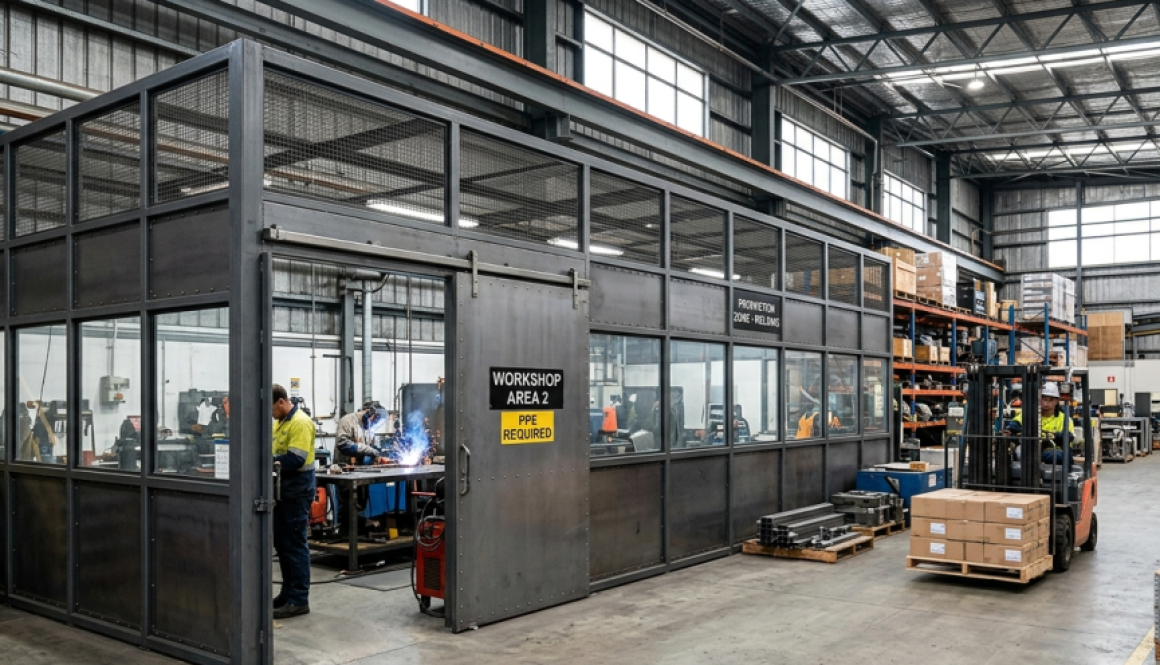
When you’re running a busy factory, warehouse, or workshop, making the most of your space isn’t just a nice-to-have, it’s essential. Whether you need to separate a production area from a staff welfare zone, secure valuable stock, or reduce noise between departments, the right partitioning system can make a world of difference. At Interior Systems Wales, we’ve helped businesses across Wales find smart, durable, and compliant solutions for exactly these challenges.
What Are Steel Industrial Partitions?
Steel industrial partitions are heavy-duty dividing wall systems built specifically for demanding commercial and industrial environments. Unlike the lightweight stud partitions you’d find in an office, these systems are constructed with robust steel framing and infilled with either solid steel panels, glazed panels, or a combination of both, depending on your requirements.
They’re designed to withstand the kind of daily punishment that comes with industrial settings: heavy machinery vibration, forklift impact, dust, temperature changes, and high footfall. Available in full-height or partial-height configurations, and in single or double-skin formats, steel industrial partitions are engineered to perform where standard partitioning simply wouldn’t cope.
The Key Benefits of Steel Industrial Partitions
There are plenty of reasons why steel industrial partitions have become a go-to solution for businesses in the manufacturing, logistics, and engineering sectors. Here’s what makes them stand out:
Strength and Durability: Steel is one of the toughest materials available for interior construction. These partitions are built to last, resisting everyday knocks, vibrations from heavy plant machinery, and the general wear and tear of a busy industrial environment. Once installed, you can expect years of reliable performance with minimal upkeep.
Fire Resistance: Safety is non-negotiable in any industrial setting. Steel industrial partitions can be specified to achieve fire ratings of 30, 60, or even 120 minutes, helping to compartmentalise a building and slow the spread of fire. This isn’t just good practice; it’s often a legal requirement under UK Building Regulations.
Enhanced Security: Need to keep certain areas restricted? Solid steel panels provide a robust, secure barrier between zones whether that’s protecting high-value stock, separating hazardous materials, or simply controlling who has access to which part of your facility.
Acoustic Performance: Industrial environments can be noisy places, and that noise doesn’t always need to travel. Steel partitions offer excellent sound reduction, making it much easier to create quieter zones for offices, welfare areas, or meeting rooms within the same building footprint.
Low Maintenance: Thanks to powder-coated steel finishes, these partitions are incredibly easy to clean and highly resistant to corrosion, moisture, and chemical exposure making them a great fit for food production, pharmaceutical, and manufacturing environments alike.
Design Flexibility: Making It Work for You
One of the things people sometimes don’t expect from steel industrial partitions is just how flexible the design options are. Far from being a one-size-fits-all solution, these systems can be tailored to suit your exact operational needs.
Solid vs. Glazed Panels: The choice between solid and glazed panels usually comes down to balancing security with visibility. Solid panels offer maximum privacy and security, while glazed sections allow natural light to pass through and let supervisors maintain clear sightlines across a facility. Many projects combine both for the best of both worlds.
Integrated Doors and Windows: Personnel doors, sliding doors, and vision panels can all be incorporated seamlessly into the partition system, keeping workflow smooth without compromising the integrity of the structure.
Colour Options: Partitions don’t have to be grey and utilitarian. With a wide range of powder coat colours available, you can match your company branding, follow safety colour-coding conventions, or simply create a more pleasant working environment.
Demountable Systems: If your business is growing or your layout is likely to change, demountable steel partition systems offer the flexibility to reconfigure or relocate panels without the disruption and waste associated with traditional construction. It’s a future-proof investment.
Where Steel Industrial Partitions Are Used
Steel industrial partitions are incredibly versatile, and we’ve installed them across a huge variety of settings, including:
Manufacturing and production facilities
Warehouses and distribution centres
Workshops and engineering units
Food production and pharmaceutical environments
Cold storage facilities
Mezzanine floor enclosures
If your space involves heavy-duty activity and you need reliable, compliant dividing walls, steel industrial partitions are almost certainly worth considering.
Why Choose Interior Systems Wales?
At ISW, we’re passionate about delivering interior solutions that genuinely work for our clients and that means taking the time to understand your space, your challenges, and your goals before we recommend anything.
Our experienced team offers a full design, supply, and installation service, handling everything from initial consultation through to project completion. We work with businesses of all sizes across Wales, bringing regional knowledge, a professional approach, and a real commitment to quality to every job we take on.
Whether you’re fitting out a brand-new facility or reconfiguring an existing one, we’re here to help you get it right.
Ready to Transform Your Space?
Steel industrial partitions are one of the most effective investments you can make in your facility; combining strength, safety, flexibility, and long-term value in a single solution.
If you’d like to find out more about what Interior Systems Wales can do for your project, we’d love to hear from you. Request a quote today and one of our friendly team will be in touch to discuss your requirements and put together a tailored proposal.
Create functional spaces, enhance your company’s image and design a space that inspires staff and impresses clients.
When designing or refurbishing an office environment, one of the most important architectural decisions involves the ceiling system.
Ceilings influence far more than the visual appearance of a workspace. They directly affect:
acoustic performance
lighting efficiency
energy consumption
fire safety
building service accessibility
long-term maintenance costs
For office environments across Cardiff, Bridgend, Newport, Swansea, Ebbw Vale, Tredegar and Brynmawr, selecting the correct ceiling system can significantly impact employee productivity and operational efficiency.
Two design approaches dominate modern office interiors:
Suspended ceilings (grid or dropped ceilings)
Exposed structural ceilings
Both systems have advantages, but they perform very differently in commercial environments.
This guide explains the technical differences, acoustic science, lighting performance and long-term maintenance considerations to help businesses choose the most suitable ceiling solution.
What Is a Suspended Ceiling?
Asuspended ceiling (also known as a dropped ceiling or grid ceiling) is a secondary ceiling installed below the structural ceiling of a building.
It typically consists of:
a galvanised steel T-bar grid framework
modular ceiling tiles or panels
suspension hangers fixed to the structural soffit
This system creates a ceiling void above the finished ceiling plane, which allows building services to be installed and concealed.
These services often include:
HVAC ductwork
electrical wiring
sprinkler pipework
network cabling
LED lighting fixtures
Suspended ceilings are widely used in commercial offices because they allow services to remain accessible while maintaining a clean, professional interior finish.
Most office ceiling systems use 600mm × 600mm or 1200mm × 600mm modular grids.
Common manufacturers include:
Armstrong Ceiling Solutions
Rockfon
Ecophon
Knauf AMF
These manufacturers design ceiling systems to provide acoustic absorption, fire resistance and high light reflectance, making them suitable for commercial environments.
Businesses planning refurbishments in areas such as Bridgend or Ebbw Vale often install suspended ceilings as part of wider office fit-out projects.
What Is an Exposed Ceiling?
An exposed ceiling leaves the building’s structural elements visible instead of installing a secondary ceiling.
This may include:
concrete slabs
steel beams
ventilation ductwork
cable trays
sprinkler systems
Exposed ceilings are often used in industrial-style office interiors, particularly in creative studios, technology companies and co-working spaces.
The structural ceiling is typically painted black, grey or white to create a uniform aesthetic.
While visually striking, exposed ceilings introduce several technical challenges that must be addressed through acoustic treatments and specialised lighting systems.
Suspended Ceiling vs Exposed Ceiling: Key Differences
The table below compares suspended ceilings and exposed ceilings across the most important factors for office buildings.
Feature
Suspended Ceiling
Exposed Ceiling
Acoustic Performance
Excellent with acoustic tiles (NRC 0.70–0.95)
Poor without acoustic treatments
Lighting Integration
LED panels integrate into grid systems
Lighting suspended from structure
Access to Building Services
Easy via removable ceiling tiles
Services visible but difficult to modify
Installation Cost
Moderate
Often lower initially
Maintenance
Tiles easily replaced
Cleaning and repainting required
Energy Efficiency
Improved due to reduced conditioned air volume
Higher energy consumption
Fire Safety
Fire-rated ceiling tiles available
No additional fire barrier
Aesthetic Style
Clean professional office appearance
Industrial modern design
Acoustic Performance: The Biggest Difference
Acoustics are one of the most important factors when selecting a ceiling system.
Open-plan offices often suffer from high levels of background noise caused by conversations, equipment and movement.
Research on office environments has measured average sound levels of approximately 53–55 dB during working hours, which can significantly affect concentration and productivity.
Research by the British Council for Offices shows that poor acoustic design significantly impacts workplace productivity.
Suspended Ceiling Acoustic Performance
Suspended ceilings improve acoustic comfort by using sound-absorbing ceiling tiles.
These tiles absorb sound waves rather than reflecting them.
Acoustic performance is measured using the Noise Reduction Coefficient (NRC).
NRC ranges from 0.00 (no absorption) to 1.00 (nearly complete absorption).
Ceiling Type
Typical NRC Rating
Acoustic Performance
Recommended Applications
Standard Mineral Fibre Tile
0.55 – 0.70
Moderate sound absorption
Offices, classrooms
High Performance Acoustic Tile
0.75 – 0.95
Excellent absorption
Call centres, meeting rooms
Exposed Concrete Ceiling
0.05 – 0.10
Very poor sound absorption
Industrial aesthetic spaces
Exposed Ceiling with Acoustic Baffles
0.40 – 0.65
Improved but inconsistent
Creative offices
High-performance acoustic ceiling systems include:
Manufacturer
Product Example
Key Features
Typical NRC
Armstrong
Ultima+
High acoustic absorption
0.85
Rockfon
Sonar
Stone wool acoustic panels
0.90
Ecophon
Focus
Premium acoustic ceiling system
0.90
Knauf AMF
Thermatex Alpha
High NRC performance
0.95
For most offices, acoustic designers recommend NRC values above 0.70 to effectively control noise levels.
Lighting Efficiency and Energy Use
Lighting design is strongly influenced by ceiling systems.
Suspended Ceilings and Lighting
Suspended ceilings allow lighting fixtures to integrate directly into the ceiling grid.
Most offices use 600 × 600 mm LED panel lights.
These provide:
uniform light distribution
reduced glare
simple installation
easy maintenance access
Many ceiling tiles also have light reflectance values above 80%, which improve illumination and reduce the number of lighting fixtures required.
Exposed Ceilings and Lighting
Lighting must be suspended or mounted directly from the structural ceiling.
Because the ceiling height is greater, light dispersion increases and additional fixtures are often required.
This can increase both installation costs and long-term energy consumption.
Factor
Suspended Ceiling
Exposed Ceiling
Lighting Type
Integrated LED panels
Suspended or track lighting
Installation Complexity
Simple grid installation
Hanging brackets required
Light Distribution
Even illumination
Uneven in high ceilings
Energy Efficiency
Higher efficiency
Lower efficiency
Maintenance Access
Easy via ceiling tiles
Difficult access
Access to Building Services
Modern offices rely on extensive building services such as electrical systems, data networks and ventilation.
Suspended Ceilings
Suspended ceilings allow ceiling tiles to be removed easily to access services.
This simplifies:
network cabling upgrades
electrical maintenance
HVAC servicing
fire system inspections
Facilities managers often prefer suspended ceilings because they allow easy access to infrastructure.
Exposed Ceilings
While services remain visible, modifications can be difficult.
Installing new infrastructure may require additional containment systems that affect the visual appearance of the office.
Fire Safety and Compliance
Ceiling systems also contribute to building fire safety strategies.
Many suspended ceiling systems incorporate fire-resistant materials designed to slow the spread of fire.
Examples include:
Knauf AMF Thermatex FireGuard
Armstrong Calla Fire Performance tiles
Rockfon stone wool ceiling panels
Exposed ceilings do not provide this additional layer of fire protection unless separate fireproofing systems are installed.
Maintenance and Lifecycle Costs
Office interiors evolve over time as businesses grow and technology changes.
Suspended Ceiling Maintenance
Suspended ceilings allow individual tiles to be replaced quickly.
Tiles can also be upgraded to improve acoustic or fire performance without replacing the entire ceiling system.
Exposed Ceiling Maintenance
Exposed structural ceilings can accumulate dust on beams, ducts and pipework.
Cleaning and repainting often require specialist access equipment.
This can increase maintenance costs over time.
Typical Office Ceiling Costs in the UK
Ceiling System
Typical Cost per m²
Installation Complexity
Maintenance Cost
Standard Suspended Ceiling
£45 – £80
Moderate
Low
Acoustic Suspended Ceiling
£60 – £120
Moderate
Low
Exposed Ceiling (painted services)
£30 – £60
Low
Medium
Exposed Ceiling with Acoustic Treatments
£70 – £150
High
Medium
Costs vary depending on ceiling height, lighting integration and acoustic requirements.
Which Ceiling Is Best for Offices?
Both systems have advantages depending on the building type.
Building Type
Recommended Ceiling System
Reason
Corporate Offices
Suspended acoustic ceiling
Noise control and lighting efficiency
Call Centres
High NRC acoustic ceiling
Speech clarity
Schools and Universities
Suspended acoustic ceiling
Classroom sound control
Healthcare Buildings
Hygienic suspended ceiling
Infection control
Creative Studios
Exposed ceiling with acoustic panels
Industrial aesthetic
Across South Wales, commercial offices continue to use suspended ceilings as the most practical solution due to their acoustic performance and ease of maintenance.
Suspended Ceilings in South Wales Office Refurbishments
Across Cardiff, Bridgend, Newport, Swansea, Ebbw Vale and surrounding towns, suspended ceilings are commonly installed duringcommercial refurbishment projects.
When selecting a ceiling system for an office refurbishment, businesses should consider:
acoustic performance requirements
lighting design and efficiency
maintenance accessibility
fire safety compliance
building aesthetics
Consulting experienced commercial fit-out contractors can help determine the most effective ceiling solution for your building.
Are suspended ceilings better for offices?
Suspended ceilings are often better for offices because they improve acoustics, integrate lighting systems and allow easy access to building services.
Why do some offices use exposed ceilings?
Exposed ceilings are used to create an industrial design style, particularly in creative studios or coworking spaces.
Do suspended ceilings reduce noise?
Yes. Acoustic ceiling tiles can absorb sound and reduce reverberation, improving speech clarity in open plan offices.
Are exposed ceilings more expensive?
Exposed ceilings can appear cheaper initially, but additional acoustic treatments and lighting systems may increase costs.
Commercial Ceiling Installation in South Wales
Interior Systems Wales installs suspended ceiling systems for commercial buildings across:
Cardiff
Bridgend
Newport
Swansea
Ebbw Vale
Tredegar
Brynmawr
Our team specialises in ceiling installations as part of complete commercial interior fit-out projects, helping businesses create comfortable and efficient workspaces.
If you are planning an office refurbishment, our specialists can help assess your building and recommend the most suitable ceiling system.
Contact Interior Systems Wales to discuss your project.
How to Choose the Right Suspended Ceiling for Your Business
When refurbishing or fitting out a commercial space, suspended ceilings are often overlooked. Yet the right ceiling plays a vital role in how a workspace looks, sounds, and performs. For business owners across Wales, choosing the correct suspended ceiling can improve productivity, enhance safety, and create a professional environment that reflects the quality of the organisation.
Whether you are upgrading an existing office, fitting out a new commercial unit, or improving a specialist environment, this guide explains what you need to know about suspended ceilings and how to choose the right solution for your business.
The Challenge: Creating a Space That Works for Your Business
Many commercial spaces start with open, exposed ceilings or outdated finishes that no longer suit how the business operates. Noise travels easily, lighting can feel harsh or uneven, and exposed services often detract from the overall appearance of the space.
For business owners, this creates several challenges:
Staff struggling to concentrate due to noise
A workspace that feels unfinished or unprofessional
Concerns around fire safety and compliance
Difficulty creating an environment suited to clients, employees, or visitors
A commercial space should support productivity, comfort, and safety. If the ceiling is not doing its job, it can work against the business rather than for it.
The Solution: Why Suspended Ceilings Make Sense
Suspended ceilings offer a practical and proven solution for commercial environments. Installed below the structural ceiling, they create a clean, accessible void for services such as lighting, ventilation, and cabling, while improving acoustics and overall appearance.
For businesses, suspended ceilings provide:
Better sound control
A clean, professional finish
Improved lighting integration
Enhanced fire safety
Easy access for future maintenance
The key is choosing the right type of suspended ceiling for how the space is used.
Step One: Understand How Your Space Is Used
Before selecting a suspended ceiling system, it’s important to consider the purpose of the space.
Ask the following questions:
Is the environment noise-sensitive?
Does the space need a high-end or architectural finish?
Are fire safety requirements a priority?
Is the area customer-facing or staff-only?
Will the layout or services change in the future?
The answers will help determine which ceiling solution best supports your business needs.
Step Two: Choosing the Right Type of Suspended Ceiling
Different environments require different ceiling solutions. Below are the suspended ceiling systems provided by Interior Systems Wales, along with guidance on where each is most effective.
Acoustic Ceilings
Acoustic ceilings are designed to reduce noise levels and improve sound quality within a space. Using sound-absorbing ceiling tiles, these systems help control echo and background noise, creating a quieter and more focused environment.
They are ideal for:
Offices and open-plan workspaces
Schools and educational facilities
Healthcare environments
Meeting rooms and communal areas
By improving acoustics, these ceilings support concentration, communication, and overall wellbeing, making them a practical choice for busy working environments.
Plasterboard Ceilings
Plasterboard ceilings provide a smooth, seamless finish, making them ideal for spaces that require a clean and polished appearance. Unlike tiled systems, plasterboard ceilings create a continuous surface that enhances the visual quality of the interior.
They are commonly used in:
Offices and reception areas
Retail and commercial spaces
Areas requiring a premium finish
Plasterboard ceilings can also be adapted for curved or customised designs, allowing businesses to achieve a more distinctive or architectural look while maintaining a professional finish.
Fire-Rated Ceilings
Fire safety is a critical consideration for any commercial building. Fire-rated suspended ceilings are designed to provide essential fire resistance, helping to slow the spread of fire and protect both the building and its occupants.
These ceilings:
Meet strict regulatory standards
Support building compliance and safety requirements
Provide peace of mind for business owners
Fire-rated ceilings are essential in many commercial environments and can be integrated alongside other ceiling systems to ensure safety without compromising on design.
Decorative Ceilings
Decorative ceilings are designed to enhance the visual impact of a space. Featuring unique textures, patterns, or colours, they add character and sophistication to interiors where appearance is especially important.
They are ideal for:
Showrooms
Hotels and hospitality environments
Executive offices
Client-facing commercial spaces
Decorative ceilings allow businesses to create memorable interiors that reflect their brand identity while maintaining the practical benefits of a suspended ceiling system.
Step Three: Practical and Compliance Considerations
Once the ceiling type has been identified, several practical factors should be considered to ensure the solution is right for the business.
These include:
Acoustic performance requirements
Fire resistance and compliance
Integration with lighting and services
Ease of access for maintenance
Long-term durability and value
A professionally designed and installed ceiling ensures these considerations are addressed from the outset, avoiding costly changes later.
Common Mistakes to Avoid
Businesses often encounter issues when ceiling systems are selected without expert guidance. Common mistakes include:
Choosing a ceiling based on appearance alone
Underestimating the importance of acoustics
Overlooking fire safety requirements
Failing to plan for future access and maintenance
Working with an experienced commercial interiors specialist helps ensure the ceiling solution performs as well as it looks.
What the Right Suspended Ceiling Can Achieve
When chosen correctly, a suspended ceiling can transform a commercial space. The right solution delivers:
A quieter, more productive working environment
A professional finish that reflects the business
Improved safety and regulatory compliance
Better lighting and overall comfort
Flexibility to adapt as the business evolves
Ultimately, a well-designed ceiling supports both the people who use the space and the long-term success of the business.
Expert Suspended Ceiling Solutions Across Wales
Choosing the right suspended ceiling does not need to be complicated. With expert advice and professional installation, businesses can create spaces that are safe, functional, and visually impressive.
Interior Systems Wales works with businesses across Wales to design and install suspended ceiling solutions tailored to each space and requirement. From acoustic and plasterboard ceilings to fire-rated and decorative systems, every solution is delivered with quality, compliance, and performance in mind.
To discuss how suspended ceilings can improve your workspace, contact us today!
How to Choose Office Partitions for Open-Plan Offices
Open-plan offices have become the go-to choice for many businesses across Wales. They encourage collaboration, make better use of space, and create a modern, flexible working environment. However, as many organisations quickly discover, open-plan layouts can also bring challenges from noise distractions to a lack of privacy.
If your office no longer supports the way your team works, the right partitioning solution can make all the difference. Office partitions allow you to create structure, improve productivity, and future-proof your workspace, without the disruption or cost of permanent building work.
This guide explains how to choose the right office partitions for your open-plan office, highlighting the different options available and how to decide which solution best suits your business.
The Challenge of Open-Plan Offices
For growing businesses in Wales, open-plan offices often start out as an ideal solution. They’re adaptable, cost-effective, and well suited to collaborative teams. But as teams expand, roles change, and hybrid working becomes more common, issues can arise.
Noise travels easily across open spaces, making it difficult for staff to focus. Confidential conversations lack privacy, and meeting areas can feel intrusive rather than productive. Over time, these challenges can affect employee wellbeing, concentration, and overall efficiency.
A well-designed office should support your people, not distract them. That’s where professional partitioning solutions come in.
Why Office Partitions Are the Smart Solution
Office partitions provide a practical way to organise your space while maintaining flexibility. Rather than committing to permanent walls, partitions allow you to divide your office into clearly defined zones that support different ways of working.
The right partitioning can:
Reduce noise and improve acoustics
Create private areas for focused work or meetings
Maintain natural light and an open feel
Improve safety and compliance
Adapt as your business grows
With the correct guidance, partitions can enhance both the look and performance of your workplace.
Step One: Understand How Your Office Is Used
Before choosing any partitioning system, it’s important to understand how your space is used day to day.
Consider the following:
How many people work in the office regularly?
Do teams need quiet areas for focused tasks?
Are meeting rooms or private offices required?
Is the space client-facing?
Are there plans for growth or reconfiguration?
Answering these questions helps ensure your partitioning solution supports both current needs and future changes.
Step Two: Choosing the Right Type of Office Partition
There is no one-size-fits-all solution. Different environments require different types of partitions, and many offices benefit from using a combination of systems.
Office Partitions
Office partitions are designed to create functional and professional layouts within open-plan spaces. They help define departments, work zones, and meeting areas while maintaining a balanced environment that supports collaboration and efficiency.
These partitions are ideal for businesses looking to improve organisation without losing the flexibility of an open-plan office.
Glass Partitions
Glass partitions are a popular choice for modern offices across Wales. They allow natural light to flow through the workspace, maintaining a bright and open feel while still creating separation.
They are commonly used for:
Meeting rooms
Private offices
Client-facing areas
Glass partitions provide a sleek, contemporary appearance and help maintain transparency without compromising on structure.
Sound Proof Partitions
For areas where noise control and privacy are essential, sound proof partitions are an effective solution. These partitions are designed to reduce sound transfer, creating quieter environments for focused work.
They are ideal for:
Boardrooms
Private offices
HR or management areas
Spaces requiring confidential discussions
Sound proof partitions help improve concentration and productivity while supporting employee wellbeing.
Fire-Rated Partitions
Fire safety is a critical consideration in any commercial environment. Fire-rated partitions are designed to meet fire safety regulations while maintaining a professional appearance.
These partitions:
Help protect people and property
Support compliance with building regulations
Can be integrated seamlessly into office design
Fire-rated solutions provide peace of mind without compromising on aesthetics or functionality.
Jumbo Partitions
Jumbo partitions are designed for large-scale environments where height, durability, and performance are key. They are commonly used in warehouses, factories, and industrial facilities.
These partitions:
Offer excellent noise insulation
Can be customised to specific height requirements
Provide a robust and practical solution for large spaces
They are ideal for separating operational areas while maintaining efficiency and safety.
Steel Industrial Partitions
Steel industrial partitions are a robust and fire-resistant solution for demanding environments. Commonly used in factories and workshops, they provide strength, security, and flexibility.
Features include:
Solid or glazed panel options
Enhanced fire resistance
Improved visibility while maintaining separation
Steel partitions are ideal where durability and safety are essential.
Step Three: Consider Practical and Regulatory Factors
Once you’ve identified the type of partition you need, it’s important to consider the practical details.
Key factors include:
Budget and long-term value
Acoustic performance
Fire safety and compliance
Visual appearance and branding
Flexibility for future changes
Professional advice ensures your partitioning solution meets both operational needs and regulatory requirements.
Common Mistakes to Avoid
Choosing office partitions without proper planning can lead to costly mistakes. Common issues include:
Focusing solely on cost rather than performance
Underestimating the importance of acoustics
Over-partitioning and limiting collaboration
Failing to plan for future growth
Overlooking fire safety requirements
Working with an experienced partitioning specialist helps avoid these pitfalls and ensures the best outcome for your space.
What the Right Office Partitions Can Achieve
When chosen correctly, office partitions transform how a workspace functions. The right solution can deliver a quieter, more productive workplace, a professional environment that reflects your brand, enhanced safety and compliance, and the flexibility to evolve alongside your business.
Ultimately, the right partitioning supports your people and helps your business perform at its best.
Expert Partitioning Solutions for Businesses Across Wales
Choosing office partitions doesn’t have to be complicated. Interior Systems Wales works closely with businesses across Wales to design and install partitioning solutions tailored to their space, safety requirements, and long-term goals. Get in touch today to discuss your office and find the right solution for your business.
Office Refurbishment vs Full Fit-Out: Which Is Right for Your Business?
At some point, every growing business reaches a crossroads. Your office no longer reflects who you are, how you work, or where you’re heading. Maybe it feels dated, cramped, or simply no longer fit for purpose. You know something needs to change, but one big question stands in the way:
Do you refurbish your existing office, or invest in a full fit-out?
For many business owners and office managers in Wales, this decision can feel overwhelming. Both options promise improvement, but they involve different levels of disruption, cost and long-term impact. This guide is here to give you clarity, helping you choose the right path for your business with confidence.
The Challenge: Improving Your Workspace Without Making the Wrong Call
Your office isn’t just a place to work. It affects productivity, staff morale, recruitment, and how clients perceive your business. Making the wrong choice can mean wasted budget, unnecessary downtime, or a space that still doesn’t quite work.
That’s why it’s important to understand the real difference between an office refurbishment and a full fit-out before committing to either.
What Is an Office Refurbishment?
An office refurbishment is about improving what you already have.
Rather than starting again, a refurbishment focuses on updating, refreshing and reconfiguring your existing workspace. Think of it as a strategic upgrade rather than a rebuild.
Common elements of an office refurbishment include:
New finishes and décorRepainting walls, installing new flooring, and refreshing tired interiors to create a more modern, professional look that aligns with your brand.
Layout improvementsAdjusting partitions, opening up spaces, or creating new offices and meeting rooms to improve flow and collaboration.
Lighting and electrics upgradesReplacing outdated lighting with energy-efficient solutions, improving power and data points, and supporting modern ways of working.
Fixtures and fittingsUpdating kitchens, breakout areas, reception spaces and office furniture to improve comfort and usability.
Because refurbishments work within the existing structure, they are typically quicker and more cost-effective than a full fit-out. Many can also be carried out in phases, allowing your business to continue operating with minimal disruption.
A well-planned refurbishment can completely transform how your office looks and feels, without the cost or commitment of starting from scratch.
What Is a Full Office Fit-Out?
A full office fit-out is a much more comprehensive process. It involves turning an empty or shell space into a fully functioning workplace.
This option is common when moving into a new building, taking on additional space, or when your current office no longer meets your needs at a fundamental level
A full fit-out typically includes:
Construction of internal layoutsInstalling all partition walls to form offices, meeting rooms, collaboration spaces and breakout areas.
Complete infrastructure installationCeilings, flooring, lighting, heating and cooling systems, plumbing for kitchens and toilets, plus full electrical and data networks.
Bespoke finishes and featuresJoinery, storage solutions, feature walls, branded reception areas and tailored design elements.
A fit-out requires more planning, coordination and investment, but it delivers one major benefit: total control. You’re not adapting to an existing layout – you’re designing a workspace that works exactly the way your business needs it to.
When done well, a full fit-out creates a future-ready office that supports growth, flexibility and staff wellbeing from day one.
The Key Differences at a Glance
While both options aim to improve your workplace, the differences are significant.
Scope of workA refurbishment updates an existing office. A fit-out builds a new office interior within a building shell.
Time and costRefurbishments are generally faster and more budget-friendly. Fit-outs take longer and require higher investment due to the wider scope.
Design freedomFit-outs offer complete creative freedom. Refurbishments are more constrained, but still highly effective when planned properly.
In simple terms, refurbishments refresh. Fit-outs reinvent.
Which Option Is Right for Your Business?
There’s no one-size-fits-all answer, but the right choice becomes clearer when you consider a few key factors.
Does Your Current Space Still Work?
If your office is in the right location, the right size, and structurally sound, but just looks dated or functions poorly, a refurbishment may be all you need.
If you’ve outgrown the space, need major layout changes, or are relocating altogether, a full fit-out is often the better long-term solution.
What’s Your Budget and Timeline?
If you need visible improvements quickly and cost-effectively, refurbishment is usually the smartest option.
If you see your office as a long-term investment and want everything designed around your future goals, a fit-out offers maximum value over time.
How Big Are the Changes You Need?
Cosmetic upgrades and moderate layout changes suit refurbishment projects well.
However, if you need new facilities, specialist rooms, or a complete redesign of how the space works, a full fit-out is often unavoidable.
How Interior Systems Wales Helps
Making the right decision doesn’t have to be stressful. That’s where Interior Systems Wales comes in.
With extensive experience delivering both office refurbishments and full fit-outs across South Wales, the team helps you choose the most practical and cost-effective route for your business – not the most expensive one.
From early advice and planning through to completion, every detail is managed with care. All trades are coordinated under one roof, including partitioning, ceilings, joinery, flooring, plumbing and electrics, ensuring a smooth, efficient project with minimal disruption.
The result is a workspace that works for your people, reflects your brand, and supports your business as it grows.
Ready to Transform Your Workspace?
Whether your office needs a fresh new look or a complete transformation, the right approach can make all the difference.
If you’re weighing up an office refurbishment or a full fit-out in Wales, Interior Systems Wales is ready to help you. Get in touch today for a free consultation or quote and take the first step towards a workspace that inspires your team, impresses your clients, and supports your business for years to come.
Fire-Rated vs Standard Partitions: What’s the Difference and When Are They Required?
When you’re planning an office fit-out or refurbishment in Wales, there’s a moment where excitement meets responsibility. You’re thinking about layouts, light, productivity and how the space will feel for your team and clients. But behind every great workspace is a quieter, more serious question that can’t be ignored: is it safe, and does it meet fire regulations?
One of the most common areas of confusion we see is around partitions. Business owners often ask whether they really need fire-rated partitions, or if standard partitions will do the job. The wrong decision can lead to costly changes later, compliance issues, or worse, putting people at risk.
This guide will walk you through the difference between fire-rated and standard partitions, when each should be used, and how to make the right choice with confidence. Our goal is simple: to help you create a workspace that looks right, works well, and keeps everyone safe.
Many businesses start with the same assumption: a wall is just a wall. If it divides space and looks good, surely that’s enough?
Unfortunately, fire safety doesn’t work that way. Building regulations in Wales are very specific about where fire resistance is required, and partitions play a major role in how a fire spreads through a building. Without clear guidance, it’s easy to install the wrong type of partition and only discover the issue during building control inspections or fire risk assessments.
That’s where understanding the difference really matters.
What Are Standard Office Partitions?
Standard office partitions are internal walls designed primarily to divide space. They’re commonly used to create offices, meeting rooms, breakout areas or storage spaces within a larger floorplan.
They’re typically constructed from metal stud frameworks, standard plasterboard, or glass panels
Standard partitions are popular because they’re cost-effective, quick to install, and flexible in design. They can help reduce noise, improve privacy, and give structure to an open space without major building work.
However, the key limitation is this: standard partitions are not designed or tested to resist fire.
In the event of a fire, flames, heat and smoke can pass through or around a standard partition relatively quickly. For that reason, building regulations limit where these partitions can be used. They are only suitable in areas where they are not acting as a fire barrier or protecting an escape route.
What Are Fire-Rated Partitions?
Fire-rated partitions are built with one critical purpose in mind: to slow the spread of fire and smoke, giving people more time to escape and reducing damage to the building.
These partitions are tested and certified to provide fire resistance for a set period, most commonly 30 minutes or 60 minutes.
They achieve this through a carefully designed system, which may include fire-rated plasterboard, steel framing, intumescent seals and specialist fixings and joint treatments.
Even glazed partitions can be fire-rated when constructed with specialist fire-resistant glass and certified systems.
What’s important to understand is that fire-rated partitions don’t have to look industrial or unattractive. Modern systems are designed to blend seamlessly into office environments, maintaining clean lines, visibility and natural light while still meeting strict fire safety requirements.
At Interior Systems Wales, fire-rated partitions are designed to work with your layout and aesthetic, not against it. Safety and design should never be a compromise.
When Are Fire-Rated Partitions Required in Wales?
This is where regulations come into play. Under Welsh building regulations and fire safety law, fire-rated partitions are required in specific situations to protect life and limit the spread of fire.
In general, any partition that forms part of a fire compartment or protects an escape route must be fire-rated.
Here are the most common scenarios.
Corridors and Escape Routes
If a partition forms a wall along an escape corridor, stairwell or protected lobby, it will almost always need to be fire-rated. These routes must remain usable long enough for people to evacuate safely.
Fire-resisting partitions help prevent smoke and flames from entering escape routes too quickly, which is crucial in an emergency.
Between Separate Units or Occupancies
If you are dividing:
One business unit from another
Office space from a warehouse or industrial area
Tenanted areas within a larger building
Those partitions usually need to be fire-rated. This compartmentation helps contain a fire within its area of origin, reducing the risk to neighbouring spaces.
High-Risk Areas
Certain rooms carry a higher fire risk due to their function. These may include:
Kitchens or tea points
Server or comms rooms
Storage areas containing flammable materials
If a fire risk assessment identifies these areas as higher risk, fire-rated partitions are often required to separate them from the rest of the workspace.
When Are Standard Partitions Acceptable?
Standard partitions are perfectly suitable when they are not acting as a fire barrier.
For example sub-dividing open-plan office areas, creating meeting rooms away from escape routes and internal layout changes that don’t affect fire compartments.
The key is understanding the role the partition plays within the building’s overall fire strategy. If it’s purely about space planning and not fire separation, a standard partition may be entirely appropriate.
This is why early professional advice is so important. It avoids assumptions and ensures compliance from the outset.
The Cost of Getting It Wrong
Choosing the wrong type of partition doesn’t just create safety risks. It can also lead to:
Failed building control inspections
Costly remedial works
Delays to opening or occupying the space
Legal and insurance complications
Getting it right first time saves money, time and stress.
How Interior Systems Wales Helps
You don’t need to navigate regulations alone. Interior Systems Wales acts as your guide through the process, helping you understand:
Where fire-rated partitions are required
What level of fire resistance is needed
How to achieve compliance without sacrificing design
Every project is approached with safety, quality and practicality in mind. The result is a workspace that not only looks professional, but also meets the highest standards of fire compliance.
Ready to Protect Your Workspace?
Choosing the right partitions is about more than dividing space. It’s about protecting your people, your business and your future.
If you’re planning an office fit-out or refurbishment in Wales and want clarity on fire-rated versus standard partitions, Interior Systems Wales is here to help.
Contact the team today for a free consultation or quote. You’ll get expert advice, compliant solutions, and the confidence that your workspace is safe, functional and built to last.
Commercial Fit Out South Wales: Transforming Your Workspace with Expert Fit-Out Services from Interior Systems Wales Ltd
A commercial fit out transforms an empty or dated shell into a productive, compliant and on-brand workplace by combining design, technical systems and careful construction to deliver usable space. This article explains what commercial fit out services are, how they benefit South Wales businesses, and the practical steps involved in taking a project from enquiry to handover. Readers will learn about core components such as partitions, suspended ceilings, flooring, lighting and M&E coordination, and how these elements work together to improve staff wellbeing, reduce energy use and present a stronger brand. Common client pain points—disruption to operations, unclear pricing and fragmented communication—are addressed with practical process guidance and examples of modern trends like hybrid workspace planning and sustainability. The following sections cover definitions and benefits, detailed service offerings, reasons to work with a local specialist for your South Wales fit-out, the step-by-step delivery process, 2024 trends shaping commercial interiors, and how to review case studies and enquiries for fit-out work in South Wales.
What Are Commercial Fit Out Services and How Do They Benefit South Wales Businesses?
Commercial fit out services convert building shells into functioning interiors by integrating partitions, ceilings, floors, lighting and mechanical and electrical systems to meet operational and regulatory needs. The mechanism is simple: design-led planning defines a scope, specialist trades install systems and finishes, and coordinated project management delivers a safe handover that meets usability and brand objectives. South Wales businesses benefit through improved space utilisation, clearer brand presentation, compliance with building standards and better employee comfort that supports productivity. Understanding these benefits helps decision-makers balance cost, disruption and long-term value when commissioning a commercial fit out in South Wales.
Commercial fit outs fall into common categories such as Cat A (basic services and finishes) and Cat B (tenant-specific fit-out), each providing different levels of scope and customisation. Cat A provides a workable base of services while Cat B refines layout, finishes and technology to suit occupants. Clear scope definition reduces change orders and helps align budgets with outcomes for your South Wales commercial fit out. Below is a concise list of primary benefits to make the advantages immediately actionable.
A commercial fit out delivers several clear advantages for South Wales organisations:
Enhanced productivity through ergonomically planned work zones and improved acoustics.
Stronger brand impression from coordinated finishes, lighting and wayfinding.
Regulatory compliance and safety from correctly installed M&E and fire-rated systems.
Operational efficiency and reduced running costs through energy-efficient lighting and HVAC integration.
The list above summarises practical gains that stakeholders can measure and prioritise when planning a commercial fit out project in South Wales, and this leads naturally into how a local specialist can help mitigate common challenges. Interior Systems Wales Ltd understands these typical client challenges and positions its services to reduce disruption, provide transparent pricing and respond quickly to enquiries while delivering tailored solutions to South Wales commercial clients.
What Does a Commercial Fit Out Involve for South Wales Businesses?
A commercial fit out involves a sequence of defined tasks from initial survey to final handover, combining design, technical installation and finishing trades to produce an operational workspace. Early stages include site survey and feasibility, then design and regulatory approvals, followed by delivery of partitions, ceilings, floor finishes, lighting and M&E coordination. Installation phases require sequencing to maintain safety and minimise operational impact, often using demountable systems and phased works to reduce downtime. The process concludes with snagging, client sign-off and the provision of as-built documentation to support future maintenance for your South Wales commercial fit out.
This checklist summarises core components and their purpose for a South Wales fit out:
Site survey and design brief to capture functional requirements and compliance needs.
Partitions and space planning to create zones for meetings, focused work and collaboration.
Suspended ceilings and lighting integration to manage acoustics and energy use.
Flooring and finishes to match brand and durability requirements.
M&E coordination to deliver services that meet performance and safety standards.
The checklist above clarifies the stages every client should expect and introduces how different system choices affect timelines and cost, which informs selecting suitable suppliers and delivery approaches for commercial fit out projects in South Wales.
How Can a Professional Fit Out Improve Your Business Space in South Wales?
A professional fit out improves business spaces by aligning physical layout, acoustics and services with operational goals to boost efficiency, employee wellbeing and client perception. By designing with function and human factors in mind, fit-outs reduce wasted circulation space, improve natural light distribution and create quieter areas for focused work. Energy-efficient lighting and integrated HVAC controls reduce running costs while modern finishes and coherent branding elevate customer and staff impressions. Consequently, a thoughtfully executed commercial fit out in South Wales produces tangible benefits in staff retention, meeting-room utilisation and overall workplace experience.
Evidence from contemporary workplace studies shows that improved acoustics and daylight access correlate with better concentration and lower absence rates, which is why fit-out choices around partitions and ceilings matter. Considering these human-centred outcomes early in the procurement process results in layouts that support hybrid working patterns and flexible occupation, and that naturally transition into the specific services and systems described in the next section for South Wales businesses.
Which South Wales Fit-Out Services Does Interior Systems Wales Ltd Provide?
Interior Systems Wales Ltd offers a full range of commercial fit-out services tailored to South Wales projects, covering partitions, suspended ceilings, flooring, lighting installation and mechanical and electrical coordination. These services combine with project management and refurbishment works to deliver turnkey commercial interior solutions that integrate design intent with buildability and compliance. Each service links to practical use cases—demountable partitions for flexible layouts, glass systems for meeting transparency, and acoustic ceilings where noise control is a priority—allowing clients to select solutions that match operational needs. Interior Systems Wales Ltd also supports enquiries and project planning to guide clients through scope definition and early budgeting for their South Wales commercial fit out.
Core service categories commonly required in South Wales fit-out projects include:
Partitions and glazed screens for space definition and privacy.
Suspended and acoustic ceilings for performance and aesthetics.
Flooring and finishes selected for durability and brand alignment.
Lighting design and installation to meet visual comfort and energy aims.
M&E coordination to integrate services and ensure compliance.
This list highlights the practical areas clients must evaluate when preparing a brief for their South Wales fit out, and the following table compares common partition types to aid decision-making.
Introductory note: The table below helps clients compare partition types by typical acoustic performance and best-use scenarios for their South Wales commercial fit out.
Partition Type
Typical Acoustic Rating
Best For
Glass partition
25–40 dB (with sealed framing)
Meeting rooms and collaborative visibility
Demountable partition
35–45 dB
Flexible office layouts and phased works
Plasterboard partition
30–50 dB (with insulation)
High privacy spaces and specialist rooms
What Types of Commercial Partitions Are Available in South Wales?
Commercial partitions available in South Wales include glass systems, demountable partitions and traditional plasterboard constructions, each offering different balances of aesthetics, acoustic performance and reusability. Glass partitions enhance daylight transmission and an open feel while requiring acoustic measures for privacy, whereas demountable partitions support rapid reconfiguration and minimise waste during future changes. Plasterboard partitions deliver strong sound insulation and can be finished to match any specification, making them suitable for private offices or rooms requiring higher fire performance. Choosing the right partition for your South Wales fit out involves considering acoustic rating, lifecycle flexibility and integration with services.
When selecting partitions for a South Wales commercial fit out, clients should weigh the benefits of reusability against initial cost and acoustic needs, and plan interfaces with ceilings and doors to avoid performance gaps. Understanding these choices reduces scope changes on-site and helps procurement align with long-term workplace strategies, which will affect installation phasing and budget certainty.
How Do Suspended Ceilings Enhance Commercial Interiors in South Wales?
Suspended ceilings (grid, acoustic tile and plasterboard) improve acoustics, conceal services and contribute to fire and thermal performance while offering aesthetic flexibility in commercial interiors across South Wales. Acoustic tile systems reduce reverberation and improve speech privacy in open-plan areas, grid ceilings provide easy access to M&E for maintenance, and plasterboard ceilings allow for continuous surfaces with higher fire integrity where required. Integration of lighting and HVAC within ceiling zones enables coordinated control strategies that improve occupant comfort and operational efficiency. Proper specification ensures ceiling choices complement partitions and lighting to meet both performance and appearance goals for your South Wales fit out.
Specifying ceiling systems early in the design process prevents clashes with lighting layouts and ductwork and ensures acoustic goals are achievable. This alignment reduces on-site delays and supports a smoother handover for your South Wales commercial fit out, linking directly to the delivery approaches described in the fit-out process section below.
Why Choose Interior Systems Wales Ltd for Your South Wales Fit-Out Project?
Interior Systems Wales Ltd positions itself around a set of distinctive service commitments designed to address common procurement and execution pain points for South Wales clients. Weekend and Out-of-Hours Scheduling; Clear and Transparent Pricing; Understanding Specific Needs (tailored solutions); Responsive Communication; Uncompromising Quality Assurance are presented as core value propositions that reduce disruption and increase predictability for your South Wales fit out. These claims are supported by practical workflows such as planned night/weekend phases to avoid business downtime, itemised quotes to clarify cost drivers and single-point communication during projects to speed decision-making. Choosing a local specialist with these commitments helps clients navigate complex fit-out trades while keeping projects aligned to budgets and timelines for their South Wales commercial fit out.
The UVPs translate into concrete client benefits in several ways for South Wales organisations:
Weekend and Out-of-Hours Scheduling reduces daytime disruption and helps maintain business continuity.
Clear and Transparent Pricing gives clients control over scope choices and reduces budget surprises.
Understanding Specific Needs ensures tailored layouts rather than one-size-fits-all installations.
Responsive Communication improves decision turnaround and minimises delays during installation.
Uncompromising Quality Assurance secures workmanship standards and durable outcomes.
How Does Weekend and Out-of-Hours Scheduling Minimise Disruption for South Wales Businesses?
Weekend and out-of-hours scheduling minimises disruption by shifting noisy or obstructive activities to times when the workplace is unoccupied, maintaining normal business operations during core hours. Planning for night or weekend phases involves risk assessments, staged deliveries and coordination with safety and access teams to ensure work proceeds safely and efficiently. Using demountable systems and pre-fabricated elements accelerates install durations during these windows and reduces the time staff are exposed to construction activity. The result is a shorter visible impact on operations and a clearer path to staged handovers that allow occupied areas to remain usable for your South Wales commercial fit out.
This approach requires tight logistics and proactive communication with client representatives to confirm access arrangements and snagging windows, reinforcing why reliable scheduling and single-point project contacts are valuable for occupied refurbishment projects in South Wales.
What Makes Our Pricing Transparent and Our Communication Responsive for South Wales Fit-Out Projects?
Transparent pricing is achieved through itemised quotes that separate materials, labour, plant and provisional sums so clients can see drivers of cost and make informed trade-offs between performance and budget. Responsive communication means defined client touchpoints, regular progress updates and a clear escalation route for decisions that affect programme or cost. Together these practices reduce uncertainty, avoid hidden costs and speed change approvals when scope adjustments are necessary for your South Wales fit out. Clients value predictable invoices and clear status reports which both feed into better project governance and smoother stakeholder sign-off.
Providing clear documentation and a named project contact enhances clarity throughout the project lifecycle and supports faster resolution of snags at the end of works, which contributes to an orderly handover and client satisfaction for South Wales clients.
How Does the Fit-Out Process Work with South Wales Fit Out Contractors?
A well-managed fit-out process follows a sequence of enquiry, site survey and design, quotation, installation and handover with quality checks at each stage to ensure outcomes match the brief. The mechanism is coordination: accurate surveys inform fixed-price quotes, design drawings inform build sequencing, and disciplined site management ensures installations meet performance and safety standards. This staged approach reduces surprises, clarifies responsibilities and creates measurable milestones for both client and contractor. Understanding the standard phases helps clients set realistic timelines and prepares them for the decisions required at each milestone for their South Wales commercial fit out.
The numbered process below clarifies typical client touchpoints and expectations during a fit-out project in South Wales:
Enquiry and initial briefing to define objectives and constraints.
Site survey and feasibility assessment to identify technical needs.
Quotation and scope agreement, including itemised costs and provisional allowances.
Design development and approvals to finalise specification and drawings.
Installation, snagging and formal handover with as-built documentation.
Introductory note: The timeline table maps typical phases to expected timescales to help clients plan procurement and operations for their South Wales fit out.
Project Phase
Typical Outcome
Typical Timeline
Enquiry & Survey
Agreed brief and site constraints
1–2 weeks
Quotation & Scope
Itemised proposal and provisional costs
1–3 weeks
Design & Approvals
Final specification and drawings
2–6 weeks
Installation & Fit-Out
Delivery of systems and finishes
2–12 weeks (varies by scope)
What Are the Key Steps from Enquiry to Project Completion for a South Wales Fit-Out?
From the initial enquiry, key steps include an on-site survey to confirm constraints, a detailed quotation with scope and provisional sums, design development to create working drawings, scheduled installation and phased handover with snagging and client sign-off. Each step produces deliverables—reports, drawings, programmes and completion packs—that form the project record and support future maintenance. Clients should expect to provide approvals at design and snag stages and to engage with the single project contact to keep the programme on track for their South Wales commercial fit out. Clear milestones and acceptance criteria reduce scope creep and support a cleaner close-out process.
These steps emphasise the importance of early decisions on system selection and phasing which impact cost and lead times, linking back to partition, ceiling and M&E choices outlined earlier for South Wales fit-out projects.
How Is Quality Assurance Maintained Throughout a South Wales Fit-Out Project?
Quality assurance is maintained through staged inspections, sign-offs at critical milestones, and adherence to applicable building and safety standards throughout delivery. Regular site checks, material verification and test commissioning of services ensure systems perform to specification before handover. Documentation of inspections and remedial actions during snagging provides transparency and a record for client acceptance. Firm workmanship standards and a structured snagging process reduce post-handover issues and support long-term durability for your South Wales commercial fit out.
Consistent quality management from survey through to final commissioning protects client investment and helps ensure that delivered workplaces meet the operational and comfort benchmarks set in the brief for South Wales businesses.
What Are the Latest Trends in South Wales Commercial Fit-Outs for 2025 and Beyond?
Current trends in South Wales fit-outs are shaped by hybrid work models, sustainability imperatives and technologies that support flexible, healthy workplaces while reducing operational costs. Hybrid workspace design emphasises adaptable zones, bookable collaboration spaces and resilient technology to enable distributed teams. Sustainability focuses on energy efficiency, low-carbon materials and circular approaches to reduce embodied emissions and improve lifecycle performance. Smart controls, sensor-driven lighting and improved acoustic design all contribute to employee wellbeing and productivity. These trends collectively influence specification choices and procurement priorities for 2025 commercial fit out projects in South Wales.
Below is a concise list of the most influential trends shaping fit-out decisions today in South Wales:
Hybrid workspace design for flexible occupancy and dynamic collaboration.
Sustainability and circular material strategies to lower carbon and lifecycle cost.
Employee wellbeing through daylight, biophilia and acoustic comfort.
Smart building systems for energy optimisation and occupant comfort.
Introductory note: The table summarises trends, their key attributes and expected client benefits for quick comparison for South Wales commercial fit outs.
Trend
Attribute
Benefit/Impact
Hybrid Workspaces
Flexible zoning and bookable resources
Improved space utilisation and agility
Sustainability
Low-carbon materials and efficiency upgrades
Lower running costs and tenant appeal
Wellbeing Design
Daylight, acoustics, biophilia
Higher staff satisfaction and retention
How Are Hybrid Workspaces and Employee Wellbeing Shaping Fit-Out Designs in South Wales?
Hybrid work requirements are driving designs that combine focused desks, collaborative hubs and touchdown areas supported by robust IT and booking systems, while wellbeing-led elements such as increased daylight, plant integration and acoustic zoning improve comfort. The mechanism is spatial diversity: providing different settings for different tasks reduces underused real estate and supports employee choice. Acoustic treatments, quiet booths and bookable meeting rooms address privacy and concentration, while daylight and biophilic elements support circadian rhythms and perceived comfort. Together, these features deliver both operational flexibility and measurable wellbeing benefits that influence retention and productivity for South Wales businesses.
Designing for hybrid work therefore means specifying adaptable partitions, resilient IT pathways and lighting that supports varied activities, bridging the gap between technical fit-out choices and human-centred outcomes for South Wales commercial fit out projects.
Why Is Sustainability Important in Modern South Wales Fit-Out Projects?
Sustainability in fit-outs reduces energy consumption, lowers operational costs and responds to tenant and stakeholder expectations for lower carbon buildings, while future-proofing spaces against tightening regulations. Practical measures include LED lighting, efficient HVAC controls, reuse of demountable partitions and selection of low-embodied-carbon finishes. These actions decrease whole-life costs and improve occupier appeal, often delivering faster payback through energy savings and lower maintenance. Emphasising sustainable choices in procurement and design also supports certification aspirations and demonstrates corporate responsibility to employees and customers for South Wales commercial fit out projects.
Prioritising sustainable materials and systems in the specification stage therefore aligns environmental goals with commercial benefits, shaping procurement decisions that affect both capital and operating budgets for South Wales fit-out projects.
How Can You See Our South Wales Fit-Out Services in Action?
Reviewing project case studies and client feedback is an effective way to evaluate a fit-out contractor’s ability to deliver on complex briefs while minimising disruption in South Wales. Case studies that present challenge → solution → outcome formats make it easier to compare approaches, materials and delivery strategies across similar sectors such as offices, retail or public buildings. Interior Systems Wales Ltd presents project summaries and a projects page to illustrate typical transformations and to help potential clients assess fit, approach and capacity for South Wales fit-out projects. Interested organisations are encouraged to request a quote or arrange a consultation through the company’s contact or projects page for tailored advice and to discuss feasibility for their South Wales commercial fit-out needs.
What Do Our Case Studies Reveal About Successful Workspace Transformations in South Wales?
Case studies typically follow a concise challenge → solution → outcome structure that highlights practical issues such as occupied refurbishment, short programmes or acoustic improvements and the approaches taken to resolve them. Example summaries avoid client-identifying details while illustrating methods: a phased office refurbishment completed with weekend works to maintain operations; a flexible layout enabled by demountable partitions to meet hybrid working needs; and an acoustic ceiling upgrade paired with LED lighting replacement to improve comfort and reduce energy use. These summaries show how planning, scheduling and appropriate system selection combine to deliver usable, attractive spaces for South Wales businesses.
Reading these case outlines helps prospective clients understand realistic timelines and trade-offs before requesting a tailored proposal or site survey for their South Wales fit-out.
How Do Client Testimonials Reflect Our Expertise and Service Quality for South Wales Fit-Out Projects?
Client feedback commonly highlights themes of punctuality, clear communication, quality workmanship and minimal disruption during installation, which aligns with the service priorities many organisations value when commissioning fit-outs. Testimonial themes typically reference responsiveness during the design phase, transparent cost presentation at quotation stage and effective snag resolution at handover, reinforcing the practical benefits of a disciplined delivery model for South Wales commercial fit out projects. Prospective clients should review testimonial summaries and project galleries to validate these themes and to match expected service levels to their own procurement requirements.
These testimonial patterns confirm why transparent pricing, single-point communication and planned scheduling are useful selection criteria when choosing a South Wales fit-out partner like Interior Systems Wales Ltd.