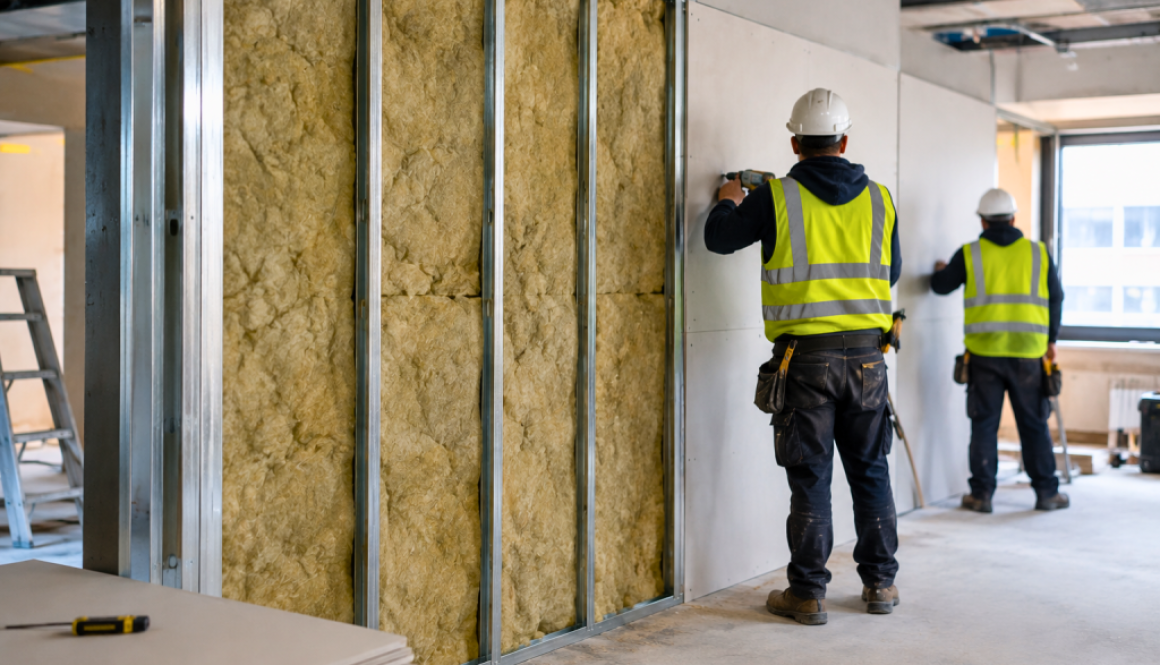
Sustainable Materials for Office Refurbishment: A Practical Guide
Sustainable Materials for Office Refurbishment: A Practical Guide
More clients now ask about sustainable materials before they ask about cost. That’s a real shift from a few years ago. It usually comes from one of three places. A company sustainability commitment. A landlord’s green lease requirement. Or staff who simply expect it.
The good news is that sustainable choices now exist across almost every part of a fit-out. Partitions, ceilings, flooring and finishes all have credible lower-impact options. This guide sets out what “sustainable” means in a commercial refurbishment. It covers where the real choices are, and how to weigh them against budget and programme.
Why Sustainability Now Shapes Fit-Out Decisions
Three drivers tend to push sustainability up the agenda. Larger businesses increasingly report on environmental impact, and their office fit-out is part of that picture. Many commercial leases now include green clauses covering waste, materials or energy performance. Staff, especially newer hires, also notice whether an employer’s workplace matches its stated values.
None of this means every project needs the highest possible eco specification. It means sustainability is now a normal question to ask early on, alongside cost and programme. It shouldn’t be an afterthought once the design is fixed.
What “Sustainable Materials” Actually Means
The term covers several distinct ideas, and it helps to separate them.
Recycled and Recyclable Content
Some products contain recycled material, such as aluminium partition framing or carpet tiles made partly from reclaimed fibres. Others are simply easy to recycle at the end of their life. That matters when a fit-out is eventually replaced or reconfigured.
Responsibly Sourced Timber and Board
Timber and board products certified by a recognised scheme, such as FSC, come from managed forests rather than unregulated sources. This applies to partition studwork, joinery and some ceiling components.
Low-Impact Manufacturing and Transport
Some materials simply cost less to produce or move. That can come from lower embodied carbon in manufacturing, or from sourcing closer to the project. A contractor sourcing locally in South Wales, rather than importing from further afield, plays a part here too.
Materials That Improve Indoor Air Quality
Low-VOC paints, adhesives and sealants release fewer volatile organic compounds into the air after installation. This matters for staff wellbeing as much as environmental impact. It’s particularly relevant in a newly refurbished space with limited ventilation while everything settles in.
Sustainable Choices for Partitions
Partitions offer some of the clearest sustainable choices in a fit-out. So much of the system can be specified with the environment in mind.
Demountable and modular systems are worth considering first. The panels unclip and relocate rather than get demolished. That generates far less waste than a stud wall built and later ripped out. We cover how these systems compare with solid and glazed options in our guide to types of office partitions.
Where a solid partition is the right choice, ask about recycled-content plasterboard and FSC-certified timber studwork. Ask for low-VOC paint on the finish too. For glazed partitions, aluminium framing with recycled content is now widely available. It doesn’t compromise the clean, modern finish that makes glass so appealing in the first place.
Reusing what’s already there matters just as much as choosing new materials. Some partitions in your refurbishment may still be structurally sound. Reconfiguring or relocating them, rather than stripping them out, avoids waste altogether. Raise this with your contractor at survey stage, before demolition gets priced in as the default. You can find out more about our office partitions in South Wales.
Sustainable Choices for Ceilings
Suspended ceilings have real scope for sustainable specification. Mineral fibre tiles are the most common suspended ceiling product. They’re usually recyclable at end of life, and some manufacturers now offer take-back schemes for old tiles during a refurbishment.
Energy-efficient suspended ceiling options go beyond the tile itself. Light-reflective tile finishes reduce how much artificial lighting you need for the same brightness. Integrating LED fittings directly into the ceiling grid also cuts energy use compared with older fluorescent fittings. Both are worth discussing if your refurbishment includes a lighting upgrade alongside the ceiling. If you’re weighing up tile options, our guide to suspended ceiling tile types explains how the main options compare.
Flooring and Finishes
Carpet tiles with recycled content, and take-back schemes for old tiles, are now standard offers from most major flooring suppliers. Low-VOC paints and adhesives apply across the whole project, not just partitions, and cost very little more over standard products. Where existing furniture is still usable, refurbishing or reupholstering it is usually both cheaper and lower-impact than replacing it outright.
Balancing Sustainability with Budget and Programme
Not every product needs the top-tier eco specification to make a real difference. Recycled-content plasterboard and FSC timber, for example, now cost close to standard products. Some fully recycled or specialist low-carbon products do carry a real premium, though. The practical approach is to prioritise changes that cost little or nothing extra first. Then decide where a premium is worth paying for, such as air quality in a space with limited ventilation.
Practical Tips
Ask your contractor for sustainable alternatives at the same time you ask for standard pricing. Don’t leave it as an afterthought once the specification is fixed. Request FSC certification and product data sheets for anything you’re told is low-VOC or recycled. That way you can see what is being supplied. Before anything gets stripped out, ask whether existing partitions, ceiling tiles or furniture can be reused or relocated instead. Check your lease for green clauses before you start specifying, too. A landlord requirement might shape decisions you’d otherwise make on cost alone.
Frequently Asked Questions
Are sustainable materials more expensive for an office refurbishment?
Some are, but many aren’t. Recycled-content plasterboard, FSC timber and low-VOC paint now cost close to standard equivalents. Specialist low-carbon or fully recycled products can carry a premium. It’s worth asking your contractor to price both options rather than assuming sustainable always costs more.
What’s the easiest sustainable change to make in an office fit-out?
Low-VOC paints and adhesives are usually the simplest starting point. They cost little more than standard products. And they apply across the whole project, not just one element like partitions or flooring.
Can existing partitions be reused instead of replaced?
Often, yes, particularly demountable or modular systems designed to be reconfigured. It depends on their condition and whether the layout still suits your needs. Raise this with your contractor at survey stage, before demolition gets priced in by default.
Do sustainable materials perform as well as standard ones?
Generally, yes. FSC timber, recycled aluminium framing and recycled-content plasterboard perform the same as standard equivalents. That’s true for strength, fire performance and finish alike. The certification or recycled content relates to sourcing and manufacturing, not the finished product’s performance.
How do I know if a product is genuinely sustainable?
Ask for the certification or data sheet rather than relying on marketing language. A reputable supplier can provide FSC certification for timber in writing. The same goes for recycled-content percentages in plasterboard or carpet tiles, and VOC ratings for paints and adhesives.
Conclusion
Sustainable materials now sit right across a commercial fit-out. That’s true from the partition frame to the ceiling tile to the paint on the wall. Some choices cost nothing extra. Others are worth a premium for the right project. What matters is asking the question early, at survey and specification stage, rather than after the design is already fixed.
Planning a Greener Refurbishment?
Tell us about your project and we’ll talk you through the sustainable options that genuinely suit your space and budget. No jargon, no upselling.
Get in touch with our teamOr call us on 01446 750994.