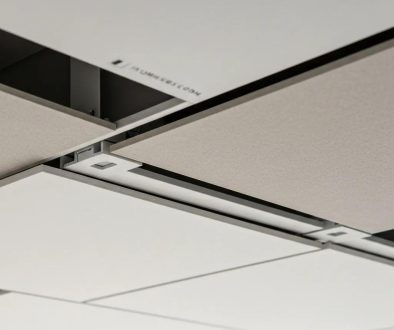
Ceiling Tile Replacement vs Full Suspended Ceiling Replacement: What Do Commercial Buildings Need?
A tired suspended ceiling does not always need full replacement. In many offices, schools, shops, trade counters and commercial units, replacing the ceiling tiles can be enough to make the space look cleaner, brighter and more professional.
But tile replacement is not always the right answer. If the ceiling grid is damaged, uneven, overloaded, corroded or poorly coordinated with lighting and services, new tiles may only hide the problem for a short time.
For commercial buildings across South Wales, the decision should be based on the condition of the existing system, not just the appearance of the tiles.
Interior Systems Wales provides suspended ceilings across South Wales for offices, schools, retail spaces, industrial units, landlord refurbishments and commercial fit-out projects.
The Short Answer
Choose ceiling tile replacement when the grid is sound, the layout still works, services are accessible, and the main problem is appearance.
Choose full suspended ceiling replacement when the grid is damaged, the layout is poor, services need better coordination, acoustic performance is weak, lighting needs upgrading, or the space is being refurbished for a new use.
The cheapest option on day one is not always the best value. A simple tile refresh can be ideal for a clean, fast improvement, but a full replacement may avoid repeated repairs, poor presentation and future disruption.

When Ceiling Tile Replacement Is Enough
Ceiling tile replacement is often suitable when the suspension grid is still safe, level, aligned and fit for purpose.
This is common in offices, schools, landlord units and commercial premises where the tiles are stained, chipped, sagging, mismatched or dated, but the grid itself is still working properly.
Tile replacement may be enough when the grid is straight and secure, the ceiling height still works, the lighting layout does not need major changes, access above the ceiling is adequate, and the existing system still suits the room.
It may also be suitable where staining is historic, and the leak source has already been resolved. Replacing stained tiles before fixing the cause of the staining is usually a waste of money.
For landlords and property managers, ceiling tile replacement can be a practical way to improve a vacant unit before marketing, handover or tenant occupation. In Cardiff offices, Pontypridd trade units, Merthyr Tydfil commercial premises and Ebbw Vale industrial offices, a clean tile replacement can make a space feel much more presentable without a full ceiling rebuild.
Interior Systems Wales provides dedicated services for suspended ceilings in Cardiff, suspended ceilings in Pontypridd, suspended ceilings in Merthyr Tydfil and suspended ceilings in Ebbw Vale.
When Full Suspended Ceiling Replacement Is Better
Full suspended ceiling replacement should be considered when the existing system is no longer technically reliable or suitable for the building.
This is often the case in older commercial spaces where the ceiling has been altered several times over the years. Lights may have been moved, tiles may no longer match, partitions may not line up with the grid, and access above the ceiling may be awkward.
A full replacement may be the better option when the grid is bent, corroded, loose or visibly uneven. It may also be needed when tiles are sagging because the system is failing, the ceiling has sustained repeated water damage, the lighting needs to be redesigned, or the ventilation grilles and fire alarms are poorly positioned.
Full replacement is also worth considering when the room layout has changed. If new partitions are being installed, the ceiling grid should be planned around the new layout rather than forced to work with an old set-out.
In offices, schools, healthcare settings, retail spaces, trade counters, and industrial offices, the ceiling needs to do more than just hide services. It needs to support lighting, acoustics, access, fire strategy (where relevant), hygiene, and long-term maintenance.

The Grid Is the Real Decision Point
Many building owners focus on the tiles because they are the visible part of the ceiling. But the grid is often the real issue.
A good suspended ceiling grid should be level, properly suspended, correctly set out and coordinated with the perimeter, lighting, ventilation and access requirements. If the grid is poor, new tiles will not solve the underlying problem.
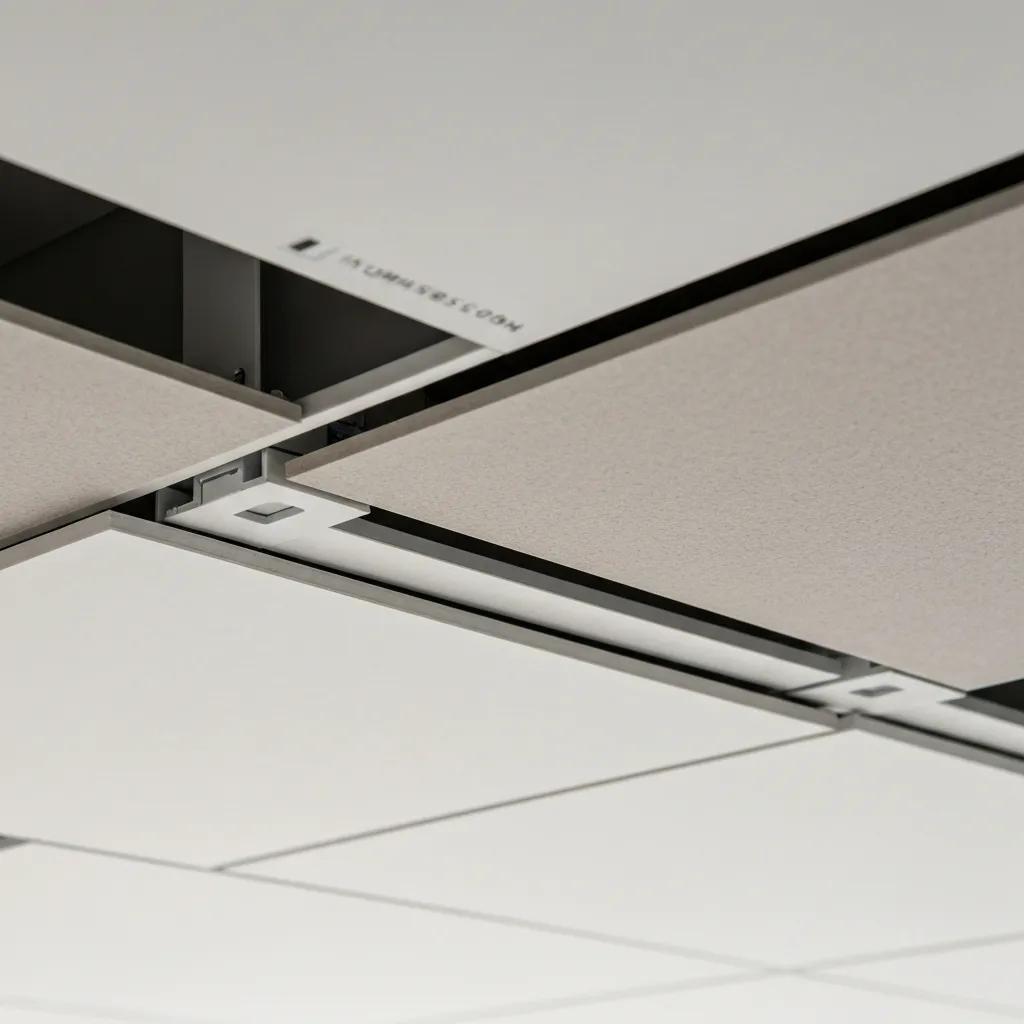
Warning signs include uneven grid lines, loose tees, poor perimeter cuts, sagging sections, damaged hangers, overloaded areas, unsupported service penetrations, awkward light positions and tiles that do not sit flat.
If these issues are present, tile replacement alone may leave the building with a cleaner-looking but still technically weak ceiling.
In broader refurbishment projects, the ceiling should be considered early on. Interior Systems Wales also delivers commercial fit out in South Wales, which means ceiling upgrades can be coordinated with partitions, lighting, services, finishes and access requirements.
Water Stains: Replace the Tile or Investigate the Cause?
Water-stained tiles are one of the most common reasons commercial ceilings look poor.
If the staining is old and the cause has been fixed, tile replacement may be enough. If the leak is ongoing, replacing the tiles will only reset the problem.
Before replacing water-damaged ceiling tiles, check whether the issue is due to a roof leak, pipework, condensation, HVAC equipment, blocked guttering, plant above the ceiling void, or an old, unresolved maintenance issue.
This is especially important in older South Wales commercial buildings, industrial units and converted premises where ceiling voids often contain multiple services. The visible stain may be the symptom, not the cause.

Lighting and Ceiling Tiles Should Be Planned Together
Replacing ceiling tiles is often a missed opportunity to improve lighting.
If the existing lighting layout is poor, replacing tiles alone may make the ceiling look cleaner but leave the room feeling dark, uneven or dated. High-reflectance tiles and coordinated LED panels can make offices, shops, schools, and reception spaces feel brighter and more professional.
A full suspended ceiling replacement provides greater control over the lighting layout. It allows the grid, lights, emergency lighting, fire alarms, ventilation grilles and access panels to be positioned properly rather than squeezed into an old layout.
For working premises, this matters. Poorly positioned lights can make desks, counters, classrooms and customer-facing areas feel uncomfortable even after the ceiling has been refreshed.
Acoustic Problems May Need More Than New Tiles
Standard ceiling tiles do not always solve acoustic problems.
If a room has echo, poor speech clarity or uncomfortable noise levels, the tile specification matters. Acoustic ceiling tiles, rafts or baffles may be needed depending on the room size, ceiling height, floor finishes, wall finishes and how the space is used.
Acoustic upgrades are especially relevant for open-plan offices, meeting rooms, classrooms, training rooms, call areas, reception spaces and shared workspaces.
If the existing grid is suitable, replacing the acoustic tile may be enough. If the ceiling layout, services or room use has changed, a more complete ceiling upgrade may be better.
Landlord Refurbishment: Quick Refresh or Proper Upgrade?
For landlords, the decision often comes down to the space’s future use.
If the unit only needs to look clean before a viewing, handover or short-term tenancy, tile replacement may be the right choice. It can improve presentation quickly when the existing grid is safe, and the services are already sensibly positioned.
If the unit is being repositioned, subdivided, upgraded or prepared for a higher-value tenant, a full suspended ceiling replacement may be better. It gives more control over lighting, access, partition lines, acoustic performance and the finished standard of the space.
For office refurbishment in South Wales, the ceiling should be reviewed early because it affects the entire interior. A poor ceiling can make a newly decorated office still feel tired.
When New Partitions Affect the Ceiling
Office partitions and suspended ceilings need to work together.
If partition walls are being moved or installed, the ceiling grid should be checked before the work starts. Partition heads, ceiling tiles, lights, smoke detectors, ventilation grilles and access panels all need to be coordinated.
If partitions are installed against a poorly planned or old ceiling grid, the result can look awkward. You may end up with small tile cuts, misaligned grid lines, lights in the wrong rooms or access panels blocked by new layouts.
Where rooms are being reconfigured, Interior Systems Wales can coordinate office partitions in South Wales with suspended ceiling works so the finished interior is cleaner and more practical.
Fire, Standards and Older Building Considerations
Suspended ceilings may need to be considered alongside the building use, project specification, fire strategy and product performance data.
Not every suspended ceiling is fire-rated. Fire performance depends on the complete system, including tiles, grid, hangers, ceiling void, penetrations and surrounding construction. A fire-rated tile alone does not automatically make the entire ceiling system suitable.
Suspended ceiling systems can be specified in accordance with BS EN 13964, which covers requirements and test methods for suspended ceilings used in interior applications.
Where fire performance is relevant, ceiling works may also need to be considered alongside Welsh Government Approved Document B fire safety guidance and the project’s specific fire strategy.
In older commercial buildings, landlords and dutyholders should also be aware of asbestos responsibilities before intrusive works take place. Ceiling voids, old boards, coatings, insulation and service areas may need proper assessment before refurbishment or removal works are carried out.
Practical Decision Guide
A tile-only replacement is usually suitable when the existing grid is level, secure and correctly set out. It is also suitable when the main issue is appearance, the lighting is acceptable, access above the ceiling is practical, and the building use is not changing.
A full suspended ceiling replacement is usually preferable when the grid is damaged, the layout is poor, the ceiling has sustained repeated water damage, the lighting needs redesign, acoustic performance is inadequate, or the space is being refurbished for a new tenant or use.
If new partitions, new lighting, HVAC changes, fire alarm changes or access improvements are planned, the ceiling should be reviewed as part of the wider project.
What Interior Systems Wales Checks Before Recommending a Solution
Before recommending tile replacement or full suspended ceiling replacement, Interior Systems Wales considers the condition of the grid, the condition of the tiles, the ceiling void, the lighting layout, the access requirements, the location of services and how the room is used.
We also consider whether the space needs acoustic improvement, moisture-resistant tiles, hygienic tiles, fire-rated systems where specified, better access panels or coordination with wider fit-out works.
That practical assessment helps avoid two common mistakes: replacing an entire ceiling when tile replacement would have been enough, or replacing tiles into a ceiling system that should have been upgraded properly.
Speak to Interior Systems Wales
Interior Systems Wales helps business owners, landlords, facilities managers and contractors choose the right ceiling solution for their building.
We can inspect the existing suspended ceiling, assess the grid, review the tile condition, consider lighting and access requirements, and advise on whether ceiling tile replacement or a full suspended ceiling replacement is the better option.
For commercial ceiling projects across Cardiff, Pontypridd, Merthyr Tydfil, Ebbw Vale and South Wales, call us today or visit our contact page.